An album can reveal a lot about itself with its first song, even its first lyric. That’s always in the back of my mind when listening to a full LP, but New York state’s Jesse Denaro opens Dear, Love with one of his most striking ,”Someone, someone save my life, because I’m dying over here.” There’s a desperation to it, and weariness that shades the rest of the album, but there’s also hope there. Maybe that someone, in some form or another, will come for Denaro.
Or, they’ll come for you, if that’s what you need. Throughout Dear, Love, Denaro writes about pain, struggle, and hard-earned triumph, but he writes in a very universal way; this could be something he experienced, but you can filter it into the context of your life and still get assurance out of it. Denaro’s lyrics are covered with “I”s, “you”s, and “we”s about what our hearts want, where we find ourselves, and where we’re going, and those sentiments are amplified by the album’s cathartic indie rock sound. Dear, Love is very much a feeling record.
This makes it a great album for if you’re feeling a little raw, but not quite despairing. Just as a listen, Dear, Love is deceptively light on its feet, alternating between strummed acoustic guitars and massive, overdriven power chords with a default speed kicked slightly above midtempo. The album’s rooted in early 00s indie rock with a touch of singer-songwriter emo thrown in for good measure in its loud-soft dynamics, fleet guitar lines, and big riffs. It isn’t hard to imagine songs like single “The Grand La Monz” or “Break Your Heart” starting as bedroom compositions, but Denaro puts enough flourish into them (see: the slide guitar in “Break Your Heart”) that they sound necessary as full band recordings.
In addition to fairly intricate songcraft, Denaro’s other sonic party trick is making dramatic stop-start bridges and outros sound natural and immensely satisfying. I don’t know how many shows he’s played, but there’s something in the instant chemistry of “Waiting War”‘s final rush, the title track’s extended, string-laden coda, or the honest to God freakout at the end of “People” that already sounds road tested, and has to sound even better live than on the record. It’s a promising sign of ambition and edge that gives Denaro one up over other artists on his level. Makes for some memorable songs, too, as those three rank as Dear, Love‘s best cuts.
Even for an album that proudly wears its heart on its sleeve, the one-two of “Young and Naive” and “Fear of God” is a clear emotional center. “Young and Naive” details grappling with temptation with both hands, and the overdriven, pulsing chorus (featuring Denaro’s raspiest vocals) is the only time that this record actually sounds dark. It marks the only time where things might not end up okay. On the flipside, “Fear of God” is Dear, Love‘s softest song, all violin and acoustic guitar. After skirting around God references for the last 30 minutes, Denaro lays it all bear in “Fear of God”, and no matter how you feel about faith or religion, the final chant of “You’re gonna be fine/You’re gonna be alright” is genuinely touching.
“Genuine” is the name of the game for Jesse Denaro, and he does it well. At its worst, the material glides by a bit too easily–“Speed of Light” and “Break Your Heart” feel a bit flat, and “Bones” doesn’t do enough with four and a half minutes–but its highlights (the title track, “Waiting War”, and “The Grand La Monz”) would fit comfortably on any indie rock playlist, and the album proper is definitely worth checking out. It’s an honest record, and more importantly, better for it.
Keep up with Jesse Denaro on Facebook, or purchase Dear, Love from his webstore.
Hello, and welcome to Radio Rants. Been awhile, let’s get this started.
Last time I talked about Lorde, she was in the awkward stage where she had her hit song, but she was this unknown, vaguely-arty foreign entity without much of a presence behind her, so the jury was still out on if she’d be a one hit wonder or not (aka, “The Gotye Zone”). Since then, she’s been fairly active with high profile live performances, good press as the Next Big Thing, and spots at music festivals. She hasn’t done a complete take over, but between “Royals” coming up and now, she’s built up enough commercial and critical clout that she isn’t going to disappear overnight.
I just wish she’d done that with a different song.
This hasn’t come up in any of my writing, but there was a solid two or three months where Lorde’s album Pure Heroine was in my frequent rotation, and I’ve thought that “Team” was one of her weaker songs. It’s the obviously designated single in hindsight (it keeps with her One Word Title streak), but in being such, it’s easy to digest and kind of boring by design. For someone like Lorde who’s best work is a little twisted, “Team” is painfully straight.
For example, I know burnouts with less wasted potential than the drumbeat here. The beat comes crashing in after an admittedly cool acapella intro (the effect on Lorde’s voice when she sings “In chains” is outright badass) with a full drumline’s force behind it, but stays painfully monotonous for the next three minutes. Whenever I hear this beat, I can’t help but think of tUnE-yArDs’ song “Gangsta”, how that song throws extra snare hits and variations into what’s fundamentally the same beat as “Team”, and how desperately I want that same variety here. I realize that “Gangsta” is out to do something wildly different, but still (and I’ll get to that later).
Beat aside, there isn’t much that stands out to “Team”‘s production. There’s a kind-of organ-y synth in the verses that gets joined by a lower one on the chorus, and as always, Lorde’s vocals are multi-tracked, and it’s competently assembled, but nothing daring or particularly memorable by her standards. The sound is a little fuller than “Royals”, but less distinct. Lorde’s vocals are great as always, and her voice remains her strongest asset, but the melody and embellishments here let her down more than anything else.
And the lyrics. Like “Royals”, the lyrics to “Team” hold up fine to great on their own, even if I have no idea what “100 jewels between teeth” means (sidenote: has someone made a drinking game from how often Lorde mentions teeth?). The gist is that the song’s about every day people who…uh, exist, I guess? No, wait, it’s that we’re all on #TeamNormo together, and we’re going against, er, something. I really don’t know. Anyway, Lorde has two favorite lyrics from the song, so let’s look at those.
“I’m kind of over getting told to throw my hands up in the air, so there” OH, SHIT. Lorde just called out pop songs for telling people to put their hands up, which definitely isn’t widely known as some shit you use as filler! She’s probably one of people that hates using the word “said”, too. Ok, in her defense, Lorde’s only seventeen, so there were alotofsongsthatabused “put your hands up” when her Saturday nights consisted of the local roller rink. But still, being catty about pop songs saying “put your hands up” is like being that person that thinks they’re clever because they point out that every song at sophomore spring dance is in 4/4 (full disclosure: that person might start a music blog in college).
Nearly everything I can’t stand about Lorde comes down to that line and its delivery. Everything she does is steeped in this pretentious “Pop is bullshit” attitude that can’t help but be eye-roll worthy. You know that pop is kind of bullshit. I know that pop is kind of bullshit. Ke$ha and Gaga got their careers started knowing that pop is kind of bullshit. This feeds into the other thing hurting Lorde, which is that I feel like she’s is far less challenging, different, and conscious than she thinks it is. I don’t think I’ve written a blog about her yet that didn’t involve mentioning another artist who one-ups whatever she’s trying at the moment. And I’m weary of anyone who talks at her length about how real they are.
Even with that, “Team” still doesn’t cross into “bad” territory, and I root for Lorde at the end of the day. There are far worse pop culture crimes to commit than acting like a teenager, and I think she’s legitimately talented. Send her off to art school, slip her roommate a stack of glitchy pop records, have her go to a few nightclubs and stagger home while coming down, and I’m sure I’ll love whatever she puts out. There’s a great artist in there somewhere, she just has to find herself, first. Maybe put her hands up sometime, have fun.
As with any year, there’s a run of (probably, ideally) great albums slated to be released this summer. This is the part of the year that I traditionally look forward to the most; after a middling release calendar in the early year and picking up in March, May and June blow by with tentpole albums coming out seemingly every week. To wit: this year, we’re getting new Black Keys and Jack White efforts within a month of each other. It’s actually the closest the two have come to dual releases in over a decade of implicit (and sometimes explicit) competition.
The Turn Blue/Lazaretto double-header can’t help but feel like those years of comparisons coming to a head, particularly since 2014 marks the first time that The Black Keys’ front man Dan Auerbach and Jack White are coming in on equal footing. White’s been regarded as the highest level of rock ‘n roll pedigree for nearly a decade, while Auerbach and drummer Patrick Carney only achieved their status as an institution in 2011. And, for once, I feel familiar with both groups; getting into The Black Keys was one of my unofficial New Year’s Resolutions this year, and I’m a longtime Stripes fan who got back into them after Stereogum’s recent Top 10 (“Girl, You Have No Faith in Medicine” was robbed!). Looking at the two, it’s hard to see how they didn’t rule the world together.
The Early Years The Black Keys are a simple band with a simple story: Dan Auerbach and Patrick Carney grew up in Akron, Ohio as friends, became friends who liked similar music, and later became friends who played similar music. That simplicity shines through on debut The Big Come Up, thickfreakness, and Rubber Factory, the group’s aggressively purist first three records. Those albums were recorded at extravagant locales, like Carney’s basement and a re-purposed rubber factory, and still sound delightfully shabby. The Keys identity on those albums is a bare-bones duo with low-fi production, rustic but bottom-heavy riffs, a loose sense of groove, and affected, crooning vocals. If they weren’t so rough (thickfreakness in particular), they could pass for dusty old blues albums. This version of The Black Keys ultimately culminated with Rubber Factory, which shines up the best parts of its predecessors. It sounds like a breakthrough record.
Years of comparisons have painted The Keys as the definitively rougher of the two, but to my ears, The White Stripes’ self-titled debut draws more blood than The Big Come Up. The White Stripes tempers its blues roots with garage rock simplicity and punky aggression; Jack’s riffs aren’t as tasteful, and Meg’s drumming is nowhere near as intricate, but there’s power in the album’s simplicity, like it’s trying to get away with being as minimal as possible. The Stripes established a broader sonic ballet on their debut, as well, with a folk undercurrent at it’s clearest on a mostly straight cover of Bob Dylan’s “One More Cup of Coffee”. Follow-up De Stijl peeled away a few layers of distortion, but pushed the band into genuine pop music, and further into folk and blues, giving them more variety.
The Breakthroughs
Both bands knew that Led Zeppelin once ruled the world, but it was Jack and Meg who realized they only did it once they made themselves into legends. Auerbach and Carney preferred to let the music speak for itself; even when they were The Biggest Band In The World, they still looked and acted like managers at Guitar Center (the cool ones who’d discount your stuff if you talked to them about Robert Johnson, but still). By comparison, The White Stripes came tumbling out of Detroit in a swirl of red, black, and white, complete with a bullshit sibling origin story and obsession with the number three. It’s the type of iconography that stuck out immediately, even without the merits of the music.
And White Blood Cells has plenty of merits. It has their first signature songs, like “Dead Leaves and the Dirty Ground”, “We’re Going to Be Friends”, and their breakout hit “Fell In Love With a Girl”, where abilities the band had previously only demonstrated over albums were condensed into two and three minute blasts. It’s their most decidedly garage rock album, too, and arrived right smack in the middle of the garage rock revival. Admittedly, it’s probably the fourth best White Stripes album, but it was the perfect record at the perfect time.
Their flatout best record and Jack White’s kingmaker remains its follow-up, Elephant. The Stripes’ music had always sounded arena-ready, but Elephant is their first album that could blow out stadium speakers. It marks the arrival of what’s become Jack White’s defining trait: those insane, shrieking, Whammy-pedal induced guitar solos. They snake their way through the album before culminating in “Ball and Biscuit”, a seven minute epic with three guitar solos that are probably responsible for 40% of any hearing loss I’ll ever acquire. White Blood Cells put The White Stripes on the map, but one-upping it with Elephant was what kept them out of the same used records bin that houses Highly Evolved.
Rubber Factory as The Black Keys breakout album would make sense, and, while it upped their presence more than their last few albums, it wasn’t a true crossover. For one thing, the external factors that boosted WBC had evaporated by 2004: blues/garage rock had given way to synth-laden post punk and jangley indie rock, and Elephant didn’t have to contend with Elephant in the way like Rubber Factory did. And, while RF might have what I still consider The Black Keys best song in “The Lengths”, it’s still very much an album in the early Keys anti-commercial stripe.
No, the Black Keys first big single came with an assist from Brian “Danger Mouse” Burton. Danger Mouse is one of my favorite producers, and produced Auerbach and Carney’s album Attack and Release during his “collaborate with everybody” phase. For the Keys,he focused their groove and shaped the riffs into something resembling hooks, and in that regard, “Tighten Up” was flawless. “Tighten Up” isn’t from Attack and Release, it’s actually from it’s follow-up, Brothers, and was Danger Mouse’s only contribution to the album, but the rest of it has his fingerprints all over; Attack and Release‘s fuller/arty sound is still present, but incorporated far more naturally. It’s the album where The Black Keys discovered how to be comfortable sounding like themselves.
Late Period/Expansion
After Brothers and “Tighten Up”, The Keys wisely added Danger Mouse on as a cowriter/coproducer for El Camino. El Camino is the Elephant to Brothers‘ White Blood Cells: a sturdier, more accessible version of something that was already great. El Camino might be their best album–choosing between it and Rubber Factory comes down to mood more than anything else–but it’s the only big name Rock album in recent memory that can credibly soundtrack a party all by itself. The album gets written off by thickfreakness diehards as “pop music”, but El Camino is much less a band selling out than it is a veteran band honing their best skills. Try to hear “Gold on the Ceiling” as anything but a sharper version “10 A.M. Automatic”; it’s the same band, just without the lo-fi production or deliberate austerity.
Post-peak, The White Stripes put out two more albums: the meandering and experimental Get Behind Me Satan and Icky Thump, which still sounds great as a single album retrospective. Get Behind Me Satan saw The Stripes run into an inevitable problem: their enforced “rock and roll duo” label was starting to chafe as they threw more piano, horns, and (of all things) marimba into their music. These problems worked themselves out by Icky Thump, which splits the difference three ways among early Stripes’ rawness, mid-career genre roulette, and late day power. As a solo artist, Jack White has followed The Black Keys example of fostering in sounds he used to only glance at; his debut Blunderbuss, tossed in more piano, folk, and R&B, and still managed to be as dramatic as some of his more constrained past. Blunderbuss wasn’t an instant classic, but it’s a sturdier album than an empty if kinda kickass song like “Sixteen Saltines” would suggest. It kept Jack on the map.
So, getting back to why these two groups didn’t dominate rock together, it all comes down to the fact that underneath all of the similarities, the two groups never operated on the same plane. Maybe they could have had a tangible rivalry if Elephant and Brothers were seven months apart, instead of seven years, but The Stripes were gigging major festivals while The Keys were eyeing regional indie labels with suspicion. It’s a shame because, while I’m sure Turn Blue and Lazaretto will be great albums with plenty of “Who wore it better?” comparisons, they’re both releases by well entrenched groups that don’t need competition between them to push each other forward. They might have both made it to the top, but that doesn’t mean anyone has to talk. Not that they did in the first place.
Hello, and welcome to Radio Rants. Let’s take a look at a new face today.
British synth-poppers Bastille are the latest in the crop of kinda indie bands to land a delayed, randomass top ten hit because top-tier indie artists aren’t trying forradio singles anymore. So, instead you get your Bastilles, Imagine Dragons, The Neighbourhoods, and fun.s: groups that have these massive, super-exposed hits, but arrived without any Pitchfork or pop hype. A couple years ago, Steven Hyden (probably my favorite living music writer) coined the phrase “silent majority rock” while discussing “Pumped Up Kicks” by Foster the People to describe these bands that seemed to will themselves into popularity.
While I don’t disagree with the term, I think it’s more accurate to call these songs “designated rock”. They split the difference between cherrypicked alternative sounds and radio accessibility, and the result is an agreeable tune that sounds vaguely alternative and dignified on the charts, and works as a pop song palette cleanser for the indie crowd. They’re really hard to hate, in other words. I’ve even reviewed some (the Neon Trees’ “Animal” is likely the first), and my reactions have ranged from enthusiasm at best to slightly positive at worst.
That said, I will take slight positivity over the infinite indifference I have towards “Pompeii” any day of the week. I can’t actually say that it’s a dislikeable song–it’s impossible to hear “Pompeii” and go the rest of the day without bobbing your head to that Gregorian chant at least once–but there isn’t much to it aside from the fact that it exists. It’s the kind of song that feels like running in place for three and a half minutes; sure, you feel a little more lively during and after, but it didn’t go anywhere. Really, it almost feels like nothing’s changed at all. I think someone said that in a song once.
Alright, let’s see where “Pompeii” and Bastille (I have to assume this band’s built on Romantic language nods–release “De Gaulle” as a second single!) stack next to other Designated Rock bands. Like most other DR, they’re fairly stylized; compare the washed out filters on the “Pomepii” cover art/Bad Blood cover to The Neighbourhood’s smeary grays or the psychedelic murals of Foster the People. It’s a cool look in any case, but it’s also a quick smoke ‘n mirrors move to make a young group look more substantial than they might really be.
That same “cool but shallow” approach goes for the music to DR bands, as well. With post-punk style synths, indie-pop drums, and layered vocals, Bastille aren’t reinventing the wheel, but they don’t sound directly like anyone else, either. Like “Radioactive”, the cascade of drums, backing vocals, and rubbery production make it easier to see Bastille as a studio project than rock band, and while it gave “Radioactive” a little extra dubstep punch, the same move stiffens the rush to “Pompeii”. That big, sweeping chorus doesn’t have any guts to it, and feels anti-climatic after the building power in the verses.
A lot of that comes down to frontman and Bastille mastermind Dan Smith (Really? “Dan Smith”? Rock bands have reached a level of bullshit were the frontrunner is led by a guy whose name screams “insurance agency middle management”?). The biggest comparison for his barrel chested, British rasp is fellow sensitive ham Marcus Mumford. Both guys excel at grabbing the listener ’round the shoulder for massive singalongs about some nebulous feelings, but, like his music, Smith sounds like he’s still holding something vital back. Be it a lack of charisma or songwriting chops, but his delivery on “Pompeii” is just too brainy to have the catharsis and the meaning, man that it strives for. I’d like Bastille a lot more if they didn’t try to hard to be smart.
Lyrically, the song kinda works but kinda doesn’t. The verses are pretty clearly the reflections of someone from Pompeii–imagery of an idle city laid to ruin, quite possibly at the hands of a vengeful deity (“Where do we begin? The rubble, or our sins?”). And, like a lot of DR bands, the lyrics are actually pretty competent; the picture in the verses is great, and even has a little personality. And the chorus, which basically wrings that “If you close your eyes, does it almost feel like nothing’s changed at all?” pseudo-philosophical line for all its worth, is reasonably done.Where the song falls apart is combining the two; there’s no way to pull off “nothing’s changed”, or “how am I gonna be an optimist?” when you got a front row seat to a full-body fuck by a volcano. If the two even worked together at all, I wouldn’t nitpick, but it just doesn’t take as “Pompeii” is.
Which summarizes how I feel about “Pompeii” as a whole. There’s a great song in here somewhere, but the finished product is stunted and kind of an annoying repeated listen. Designated rock can take some time to get used to, but I’m starting to write “Pompeii” off as that song with the ringtone monks that I’m never going to like. I’d rather listen to it than, say, chew on volcanic ash, but I’m more than okay with seeing the tail end of this one. I gave a few other Bastille songs a go, and “Bad Blood” stuck with me, but otherwise…eh. Maybe I’ll like their second album.

 An album can reveal a lot about itself with its first song, even its first lyric. That’s always in the back of my mind when listening to a full LP, but New York state’s Jesse Denaro opens Dear, Love with one of his most striking ,”Someone, someone save my life, because I’m dying over here.” There’s a desperation to it, and weariness that shades the rest of the album, but there’s also hope there. Maybe that someone, in some form or another, will come for Denaro.
 The Early Years
 And White Blood Cells has plenty of merits. It has their first signature songs, like “Dead Leaves and the Dirty Ground”, “We’re Going to Be Friends”, and their breakout hit “Fell In Love With a Girl”, where abilities the band had previously only demonstrated over albums were condensed into two and three minute blasts. It’s their most decidedly garage rock album, too, and arrived right smack in the middle of the garage rock revival. Admittedly, it’s probably the fourth best White Stripes album, but it was the perfect record at the perfect time.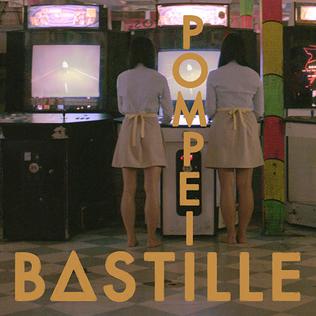
 Ranting About Music!