Somewhere I Belong: on Chester Bennington

Chester Bennington of Linkin Park fame was announced dead this afternoon at the age of 41. His death has been ruled a suicide.

Bennington’s passing is heartbreaking for a number of reasons. He suffered from sexual abuse as a small child. He had a history of drug addiction starting in his teens that would come and go in his adult life. He got beat up in school for being a skinny rail of a kid. More recently, he became good friends with Soundgarden singer Chris Cornell, and sang at Cornell’s memorial when he killed himself this year. Today is Cornell’s 53rd birthday, which Bennington had to be aware of.

Yet, none of Bennington’s past turmoil and hard life were readily apparent in how he presented himself with Linkin Park. I watched a lot of LP tape when I was 14 or so, and when he wasn’t singing the band’s angsty songs, Bennington came across an affable guy. He had a good chemistry with the more bro-y Mike Shinoda (Linkin Park’s rapper/producer), and seemed like maybe someone inclined to be quiet if left to his own devices, but he was sweet. A quick YouTube search pulled up an interview of him on the morning show circuit this February, praising pop stars and wearing a very fine hat and intelligent glasses; he seemed great. And now he’s gone.

So I’m gonna talk about the half a record he sort of made with Jay-Z.

But first, I want to appreciate how Bennington operated in Linkin Park. Like virtually everyone else, I’ve spent the later part of the day spinning throwback LP LPs, and their delivery system is as ingenious as it is obvious. The songs open with either some vaguely techno production or drop-tuned guitar riff, get quiet for sung or rapped verses, Bennington prepares for takeoff with some backing vocals, and then the song fires into a musically broad chorus where Bennington gets sing/scream these massive, arresting, full-body hooks. These choruses are big, as lyrically overwrought as they are musically primal, and they’re where Bennington shines. If he had to hold a note or a scream, he held the fuck out of it without shying away; just listen to how he leaps all the way into “In the End,” which may still be the purest example of Linkin Park in action. And unlike fellow nu-metal bleaters like surfer dude Brendan Boyd or the grunting of Jonathan Davis, Bennington virtually lived in his upper register; dude wasn’t afraid of sounding pretty. That was probably because he knew he could not only out-scream virtually anyone, but he could pivot between the two on a dime without losing a shred of intensity.

Okay, now we can talk about Collision Course, Linkin Park’s semi-infamous mash-up EP with (the then retired) Jay-Z. Collision Course was weird in 2004, and it’s somehow even weirder now. Try to explain to someone today that one of the biggest rappers in the world and one of the biggest rock bands in the world (when this distinction meant something) would not only work each other’s songs into new songs with rerecorded vocals, but an actual music label would release it with the expectation that people would buy it, and you’d get blank stares back. But it worked! I know this because Collision Course debuted at #1 on the Billboard 200, but also because I bought it (I bought the edited version because I was more familiar with Linkin Park, who don’t swear on their records, than Jay-Z, who could buy another company if he emptied his swear jar), and that brown and blue CD lived in my portable player.

I fired Collision Course back up after today’s events out of familiarity, but I heard it almost entirely differently. Collision Course asks more of Bennington than it does Shinoda or Hov himself. The two of them just have to rework the verses of “Papercut” to (almost) fit over the beat to “Big Pimpin” and lay “Encore” over “Numb,” while Bennington has to essentially act as the glue to hold the thing together. He has to keep the touch light on the Jay-Z instrumentals while still going just as hard on the Linkin Park stuff; it requires him to expand his skill set. And, remarkably, he pulls it off. He knows how to double Shinoda’s cadences when he raps over “Dirt Off Your Shoulder,” and how to sound triumphant on the “Encore” part of “Numb/Encore” while letting loose on LP standbys like “Faint.” My favorite song on the project’s always been “Izzo/In the End,” where Bennington’s regulated to backing vocals, but just listen to how bright he sounds behind Jay, or the soaring notes under Shinoda’s verse. He sings like he’s supposed to be there.

More than the technical aspects or the sound, what stays with me about Bennington’s voice, and about him, is that he never sounded unsure. This is why I think people, me included, riffed on Linkin Park’s lyrics; it’s easy to point and laugh at the grandiose nature of “In the End,” “One Step Closer,” or especially “Crawling,” because they articulate their woes in the bluntest, most earnest, possible language. There’s no reflexive, self-referential irony, nor anything constituting a filter. There may not even be an edit button. But he was there, pinched register and all, and he ended up sounding like he belonged there, and so could you. That meant something to me. And I’m sure it meant something to you, too.

The number for the Suicide Prevention Helpine is 1-800-273-8255, or you can text the crisis text line 741741 “CONNECT” to start. Please use any resource you need.

Posted in "Thoughts" | Tagged , | Leave a comment

Album Review: Lorde – Melodrama

Lorde and her 2013 debut album Pure Heroine were legitimately pop paradigm shifters.

I say that with zero hyperbole. With Pure Heroine and “Royals,” Lorde tapped into something people (but especially young people) wanted without knowing it. She came at a time where club pop was literally past its zombie state, and not only did she provide a one-off cure, but a template going forward. And that last part is what puts her above, like Gotye, Lorde wasn’t just big, she was impactful. Imagining our pop landscape without her triggers a bunch of questions: does anyone pay attention to Alessia Cara, Daya, or Halsey? How about Meghan Trainor, does “All About That Bass” catch on? How different does 1989 sound? (Sidebar: you could say parts of Melodrama sound kinda like 1989, but I’d argue that’s because 1989 quietly took notes from Lorde; there are similar vocal cues throughout, and “Blank Space” is straight up Max Martin-ized Pure Heroine.)

So while Lorde made a pop market for herself, she doesn’t seem interested in continuing down it on Melodrama, and the album’s all the better for it. She works outside Pure Heroine‘s icy, rap-inspired beats and tales of teenage ennui, instead collaborating with fun. member, Bleachers frontman, and Actual Peter Pan Jack Antonoff for a loosely narrative record about partying through, or possibly partying in, heartbreak in New York City. Musically, Melodrama trades in its predecessor’s minimalism for more dynamic arrangements that use a wider variety of unstable synths, strings, the occasional guitar, and a lot of piano; the differences are as stark as the two albums’ covers.

Melodrama is a pop album, but it isn’t really a “pop” album, if that makes sense. If you consider pop music as a spectrum with “commerce” on one end represented by Divide and Memories…Do Not Open and Blonde and Art Angels standing in for “art” on the other, then Melodrama exists closer to the art side than most Top 40 records (PH included). It’s probably just a little further along the art side than, say, ANTI. While its songs are written as pop songs, structured as pop songs, and sound the way pop songs do, none of them sound engineered for radio play, nor are they meant to chase off anyone here from “Team.” The album wants to play around with pop, but on its terms more than the mainstream’s, and is inclusive without being compromising.

In that way,
Melodrama is an extension of Lorde herself: an oddball whose good faith quirks compel far more often than they frustrate. There are tons flourishes on this album that could fall flat–I’m talking about the way Lorde drags out “And then they are boooored of me” on “Liability,” or “Broadcast the boom-boom-boom-boom/and make’em all dance to it” during the most airy, graceful parts of “The Louvre,” or the “Bwowh” in “Homemade Dynamite”–and would feel contrived coming from anyone else, but from Ella Yelich-O”Connor? They’re charming as hell (the sneering chant on “Loveless” is a brick, but fuckin’ nobody can make spelling in a song sound cool). The quirks extend to the music, too. The bouncing “Homemade Dynamite” gets closest to radio-ready, thanks to a steady, stuttering beat, and that effortlessly cool “Blow shit up with homemade d-d-dynamite” chorus, and I’m sure there’s a less interesting version of “Supercut” that takes off the stadium-ready synthpop track’s extended fade out, but generally, these songs are best when played together.

Look no further than Melodrama‘s peak run in the middle. Sure, “Hard Feelings/Loveless” is the weak link in the chain, but it’s bolstered by everything else. “Homemade Dynamite” is where the album’s off-center pop first gels, and then it launches into “The Louvre,” which balances Lorde’s best songwriting with her most interesting production. “Liability” is the heartbreaker that pumps a bunch of loneliness into her Too-Muchness, while “Sober II (Melodrama)” is the moment of blunt realization. The arc masterfully traces the “I tried to drink it away” feeling of going to a party to your emotions catching up with you and blowing it all to hell (the exact moment of delivery is the gloriously noisy part of “Hard Feelings”), and the immediate fallout, and while doing so, it’s some of the best music Lorde’s ever made.

Lorde’s writing, even at its most gleeful on “The Louvre,” cops to impermanence and eventual loss, and it’s her ability to weave you in her psyche that elevates Melodrama. She’s been a writerly lyricist since the beginning, but she outdoes herself here. Not only is her writing tighter and more empathetic, but she has these hand grenade one-liners, like “I care for myself the way I used to care for you,” and “They’ll talk about us, and how we kissed and killed each other.” It’s the lyrics that make “Supercut” and “Hard Feelings” work, even if she doesn’t overcome ho-hum arrangements elsewhere.

Melodrama’s quality is a relief for an album I was nervous about during pre-release. I’ve tried for months to get into “Green Light” beyond the lovely piano breakdown, but it just doesn’t come together; the tepid chorus doesn’t match the energetic verses. “Sober” has a similar issue, where the screwy vocals and pulsating beat build and build tension that never leads to catharsis. In a New York Times profile, Lorde talked about the time pop music warlock Max Martin discussed her “incorrect songwriting” with her (other sidebar: the details of this are now in dispute. The Times piece states that “incorrect songwriting” refers to “Green Light,” while in a podcast this week, Lorde said it was actually about “Royals.” Times writer Jonah Weiner disagrees somewhat, but the long and short of it is that the phrase “incorrect songwriting” is now a virtue in the Lorde canon). The guts of what Martin’s referencing is Lorde’s tendency to zag instead of zig with her songwriting choices; sometimes, like going from palm-muted guitars to floating synths on “The Louvre,” it works, and when it means petering out on “Sober” and “Green Light,” it doesn’t. Ditto for “Writer in the Dark” which is too undercooked musically to stand next to Lorde’s exaggerated Kate Bush impression and potent lyrics. It’s no where near enough to sink the album, but still, Melodrama isn’t without blemishes.

The other kind of a drag is that Melodrama‘s mix just seems off. It’s hyper-compressed, tinny, and even a little grating at times because it sounds like everything’s fighting to be heard over everything else. This feels like a bug and not a feature; I’m thinking of the most anthemic bits of “Perfect Places,” where Lorde’s multi-tracked vocals clash with synths, pianos, and a wet noodle drum track (speaking of: why are the drums so inert on like, 65% of this record?). I listened to songs from Melodrama next to The Weeknd, Tegan and Sara, Frank Ocean, Bruno Mars, Katy Perry, and Rihanna, just to make sure I wasn’t crazy or looking for a reason to yell at Jack Antonoff (who, aside from getting his smudgy fingerprints on the drums here, is largely fine), but even when Melodrama has the better arrangements, it just sounds clipped.

Even if I like it more with my head than my heart, there’s still so much on Melodrama to dig into that it’s a rewarding, emotionally supercharged experience. No matter if the bookends are comparatively flimsy, the core of this thing is excellent, and solidifies Lorde as one of our best young voices in pop. She was a gamechanger in 2013, and she’s the one to catch up with now. But, my favorite thing about Melodrama is that already, this record means a lot to people, and even my reservations melt away in the face of “The Louvre” or “Supercut,” which are impossible to not love. This album has gone from one of the most anticipated ones of the year to one of its most talked about. Melodrama deserves the chatter; let’em talk.

Posted in Album Reviews | Tagged , , , , , , , | Leave a comment

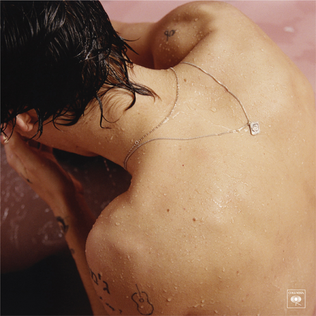
Album Review: Harry Styles – Harry Styles

Early in One Direction’s career, Harry Styles became “the one with the hair” to me. Granted, that descriptor shouldn’t go far in a group as aggressively moussed as 1D, but it worked as shorthand for saying, “You know, that one” in a photo. You look at One Direction, and even before the “solo careers” conversation came to the forefront with Zayn breaking rank, Styles just seemed like The Guy. To be fair, post-Justified pop dictates that at least one member tries going alone in every successful teen group, but Styles has that preternatural charisma (see also: Lorde) where he’d try going solo even if the culture didn’t demand it. He never had the best voice–remember, 1D was a band made up of guys who couldn’t cut it on their own in X Factor–but between the vocal talent he did have, his self-possession, and being the 1D member best at being famous, he had more than enough to shoot his shot. It just seemed inevitable.
Which brings us to Harry Styles. It’s fine. Anyone here for Appointment Hate Listening is going to be disappointed (and didn’t pay much attention to 1D–most of their stuff outside “What Makes You Beautiful” and “Little Things” is okay), as is anyone expecting an instant classic. The album is a model of efficiency: discounting the elongated lead single “Sign of the Times,” songs average out to the Pop Song Standard three and a half minutes for 10 tunes in 40 minutes. The songs themselves, written by Styles and arena-ready producer Jeff Bhasker (credits: Kanye West, Lana Del Rey, Mark Ronson) and his team, are similarly professional in their classic rock aspirations: the electric guitars crunch, the acoustic ones squeak and buzz, and Styles’ vocals are brought all the way to the front in a mix that’s as cozy as crushed velvet. None of the songs outright suck, but a number of them confuse evoking the greats for being great. Overall, Harry Styles is a competent debut album that suggests Styles has the pieces for a long career, he just needs to work on figuring out how they fit.

I’m also interested in what Harry Styles isn’t. The narratives around the album are that (1) Styles has bucked the expectation set by Justin Timberlake for former boy-band members breaking out, and that (2) he’s going against the grain by releasing music that’s not beholden to modern trends. These are true, but not that true. Styles is still running Timberlake’s “I’m older and sexier” playbook, he’s just doing it with pricey Gibson hollow-bodies instead of expensive synths. Really, he takes more from Timberlake than the other 1Ders: “Two Ghosts” is his “song about a pop star ex” in the vein of “Cry Me a River,” and with “Sign of the Times,” he approaches the The 20/20 Experience mentality of Serious Art with a long song done on real instruments.

And yeah, the album’s brand of guitar-slinging, singer-songwriter classic rock is trend averse, but I’d argue it chooses something even safer. Harry Styles cribs from The Beatles, The Rolling Stones, Elton John, (I guess, kinda) David Bowie, and Stealers Wheel; music that isn’t really “in” or “out,” it just is. You don’t have to seek out “Benny and the Jets” or “Stuck in the Middle With You”–I never have–they find you. They find you common spaces, like network drama ads, family friendly restaurants, and waiting rooms, and Harry Styles is more approachable because it leans on that familiarity. While it’s possible that shirking Quavo and whichever producer Bieber just worked with might cost Styles radio spins, I think it’ll likely benefit him now and later more than it’ll hurt: he gets cred now for being different/”different,” and odds are “Sign of the Times” will live a longer life because it doesn’t sound beholden to 2017.

You can see the benefits in the reaction to “Sign of the Times.” That wee little Harry Styles from One Direction’s opening solo bid was a 6 minute long, sing-to-the-rafters, rock ballad complete with a choir, a massive vocal performance, and wide-screen drum rolls and guitar strums was (and hell, still is) a shock; the fact that “Sign of the Times” more or less pulls off the grandeur feels secondary to it trying in the first place. But more than the “Bowie-esque” tag I’ve seen ascribed to it over and over, “Sign of the Times” calls to mind Oasis. It’s a chord-friendly, sweeping ballad. Its size and sweep belie the fact that it’s about fuckall. Its title shamelessly bites a more famous work, and–this is my favorite part–its opening lyric ganks the name of a mid-period Oasis strums-’n-piano ballad that itself is about fuckall (Noel Gallagher has to find this hilarious), and in spite of that, it still works. Wisely, Harry Styles doesn’t try anything as big again, letting “Sign of the Times” stand on its own.

Instead, he tries on a handful of rock guises. “Carolina” is humid Revolver worship. “Woman” has to exist because Styles thought covering “Benny and the Jets” would be too obvious. “Two Ghosts” dips its toes in Sea Change-y singer-songwriter melancholy with bonus “Please listen to my thoughts about my two month relationship from the first Obama administration’s twilight” subtext. You get a few Travis picking exercises out of “Sweet Creature” before the album does a 180 two songs later with the dick-swinging rock of “Kiwi.” It’s the less put-upon stuff like “From the Dining Room Table” where Styles fares best, mostly because there’s actual attention to detail in the craft and songwriting. Even if the melody’s a little sing-song on “…Table,” and opener “Meet Me in the Hallway” is overwrought, Styles holds them together as songs.

Which is the exact opposite of what happens when he tries to rawk out on “Only Angel” and “Kiwi,” neither of which need to be here. I get that Styles basically had to put one or two focus-grouped rockers on the album as part of his Rock Star candidacy, but holy fuck, could someone have at least written them? Not only could the music of “Only Angel” soundtrack a Viagra commercial set to play exclusively in Hard Rock Cafes, but its lyrics were rote by the time Styles was born. He’s a charismatic guy, but it’s impossible not to sound 76 singing “Couldn’t take you home to mother in a skirt that short” and “She’s a devil in between the sheets.” He’s let down again on “Kiwi,” which is essentially Wolfmother’s “Woman” with lyrics somehow dumber than “She’s a woman, you know what I mean.”

But, like I said, Harry Styles never really flames out, even with those 2 knuckle-draggers. This is due to the album’s core sense of self, and that’s what separates it from the work of other 1D alumni. Everyone’s working off a template of some form, Styles is just the most successful. Zayn’s “Have you heard Trilogy?” R&B-tinged pop is confident, but generally anonymous in a trend-chasing way, while Louis Tomlinson’s collaboration with Steve Aoki is an okay spin on BiebEDM. “Slow Hands” from Niall Horan is probably the most likeable of the Other Guys’ work, although anything looks promising next to Liam Payne turning in an already dated Mustardwave appearance with Quavo doing a Ty Dolla Sign impression. Styles’ closest comparison might actually be Miley Cyrus, who–having made her dollar off rap–is making MOR rootsy pop rock that’s likewise deliberately out of pop’s step. The two of them are signalling authenticity and a respect for the classics, but they’re also really, really interested in distancing themselves from their recent personas and position themselves as mature grownups. They’re making something functional instead of enduring. Boy bands and ratchet pop have a way of sticking, and they’re just trying to shake it off.

Posted in Uncategorized | Tagged , , , , , | Leave a comment

Ranting About Music’s (Very Late and Still Un)Official Bunbury Report: Sunday 2017 7 Takeaways

Last Sunday was the final day of Bunbury ’17. Day 3 promised a robust line-up, more people, and, for the third day in a row, lots of sun. All in all, it was a good day, and below are 7 things that I took away from it.

1. Sunday Recalled Bunburys Past
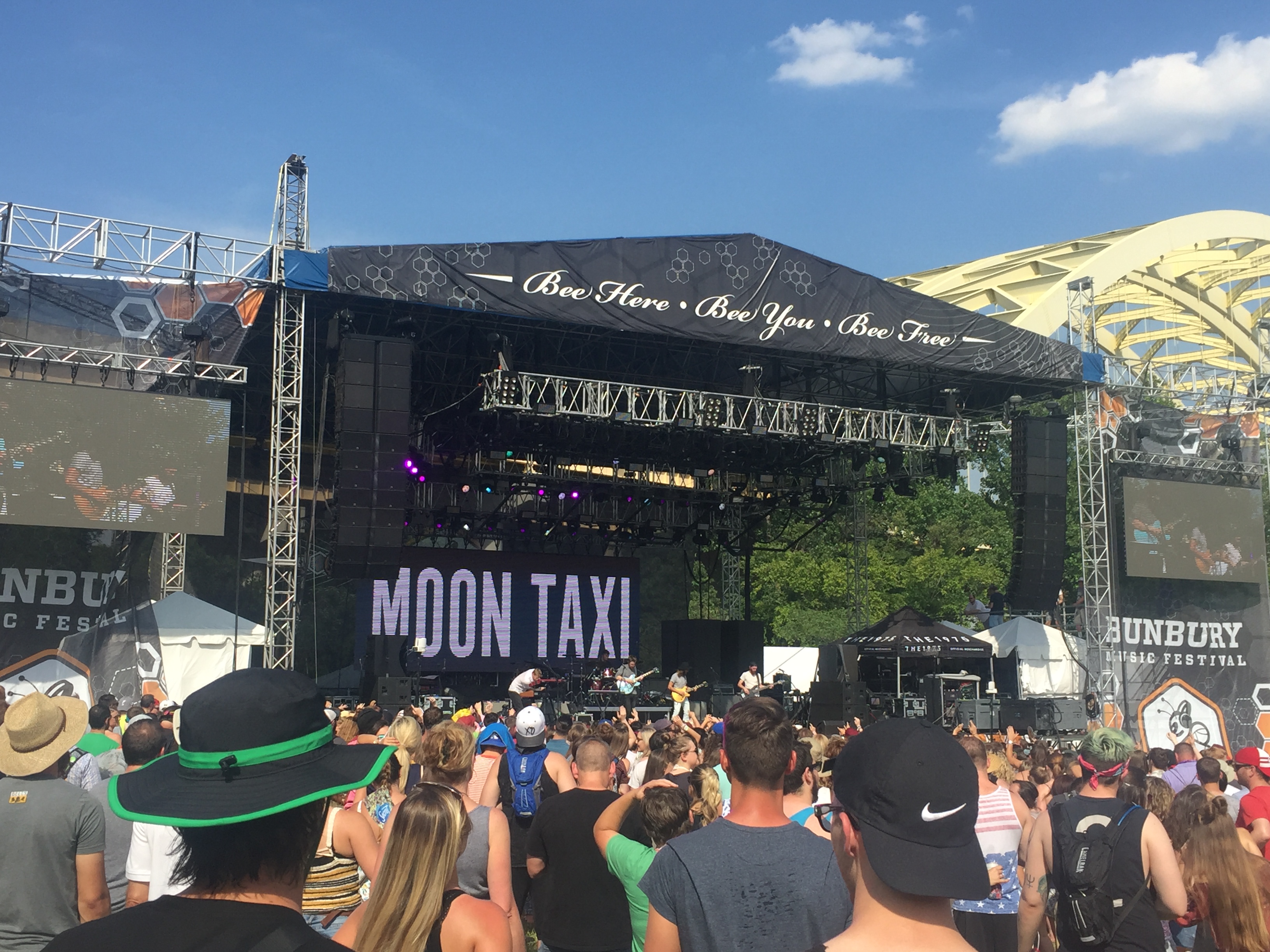
There’s an argument you could make about Bunbury losing something in the last year or two compared to its earliest, more rock-centric incarnations. I don’t think the move away from rock is an inherent bad thing or wrong move, but the festival’s non-rock lineups have always felt uneven (Pretty Lights: good! G-Eazy: why?). Sunday still had the occasional outlier with slam poetry rapper Watsky and Guy Who Plays Music Jon Bellion, but yielded most of its stage space to dudes with guitars (emphasis on dudes; Bunbury recently came up dead last in a breakdown of festival lineups by gender representation in an analysis done by Pitchfork–a serious downer from 2 years ago where I went a whole day without seeing an all-male act). Be it the jams of Moon Taxi or foot-on-the-gas rush of Flogging Molly and Reverend Horton Heat, Sunday incorporated bands of varying sizes and sounds for a thematically consistent and satisfying day.

2. White Reaper Might Be Serious About That “World’s Best American Band” Moniker
“Hello, we are White Reaper, our band’s called White Reaper, we go by the name White Reaper” announced singer/guitarist Tony Esposito before the Louisville, KY band kicked into the most enjoyably dirtbag-y set of the weekend. Their second album, The World’s Best American Band, came out in April, and I’ve been spinning it constantly; imagine riff-laden power-pop/garage rock with air-guitar inspiring solos and vocals made entirely of voice cracks that sounds tailor-made to smoking cheap cigarettes in the parking lot after school, and you’re most of the way there. The band’s attitude matched the music’s with snarky banter, dual guitar solos, members jumping around, and the occasional scissor kick. I get the smirking dare of calling an album The World’s Best American Band (their first record was White Reaper Does It Again), but all I’m saying is that the only bands that were better than White Reaper were functionally Irish (Flogging Molly) or super British (The 1975). The stars and stripes are up for grabs.

3. It’s Hard to Watch Flogging Molly and Not Keeping Thinking “How?”
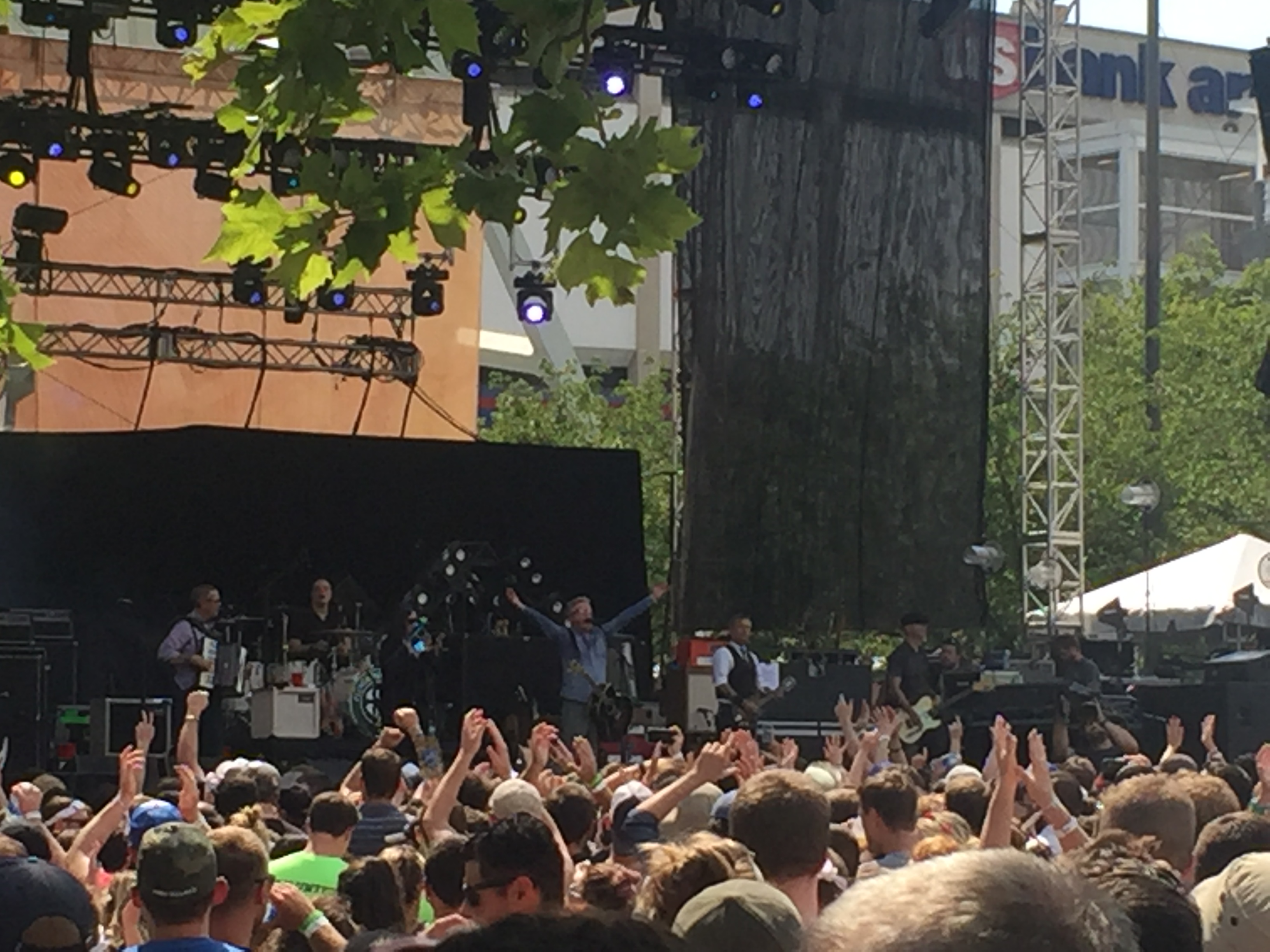
Veteran Celtic punks Flogging Molly were an early day highlight, charging out of the gate with “The Hand of John L. Sullivan” and never letting up, even during kinda-ballad “Float” or the heart on the sleeve anthem “If I Ever Leave This World Alive.” As I bounced between two different groups of friends, I kept finding new ways to be astounded by this band: “How have they played nothing but 16th notes like it’s nothing for the last hour?” “How is Dave King pounding Guinness in what has to be 90 degree heat?” “How am I not supposed to lose my entire shit to ‘Devils Dance Floor’?” “How is Float such an underrated album?” “How am I supposed to be excited for 30 Seconds to Mars or some shit after this?” With indefatigable energy and a massive back catalog, Flogging Molly raised pints and spirits on a hot afternoon.

(This is kind of a side note, but FM also had this weird way of making Reverend Horton Heat later in the day seem completely inert. RHH still sounded good, but their seasoned version of fast-paced, head-down rockabilly stood in the shadow of Flogging Molly’s rollicking Celtic punk rock a few hours earlier. They had a killer “Ace of Spades” cover, though.)

4. Jared Leto Really Likes Talking
Even on a day where there was distinctly more stage banter across the board than there had been most of the weekend, Jared Leto of 30 Seconds to Mars (or, marginally less charitably, Suicide Squad) was an egregious talker. He chatted in-between songs about how “his kind of people” (idk) could be counted on to be there, about how 30S2M had played Bogarts at some point in the past, and called someone in the audience “so cute.” My friends and I ended up leaving early to camp for The 1975 after a song, and it wasn’t until we were clear on the other side of the festival that we heard Leto start the next one (an acoustic version of “The Kill”), which was apparently their 4th song of about 7 or 8. At least he talked instead of surprising everyone with dead pigs or something.

5. Musings With Muse
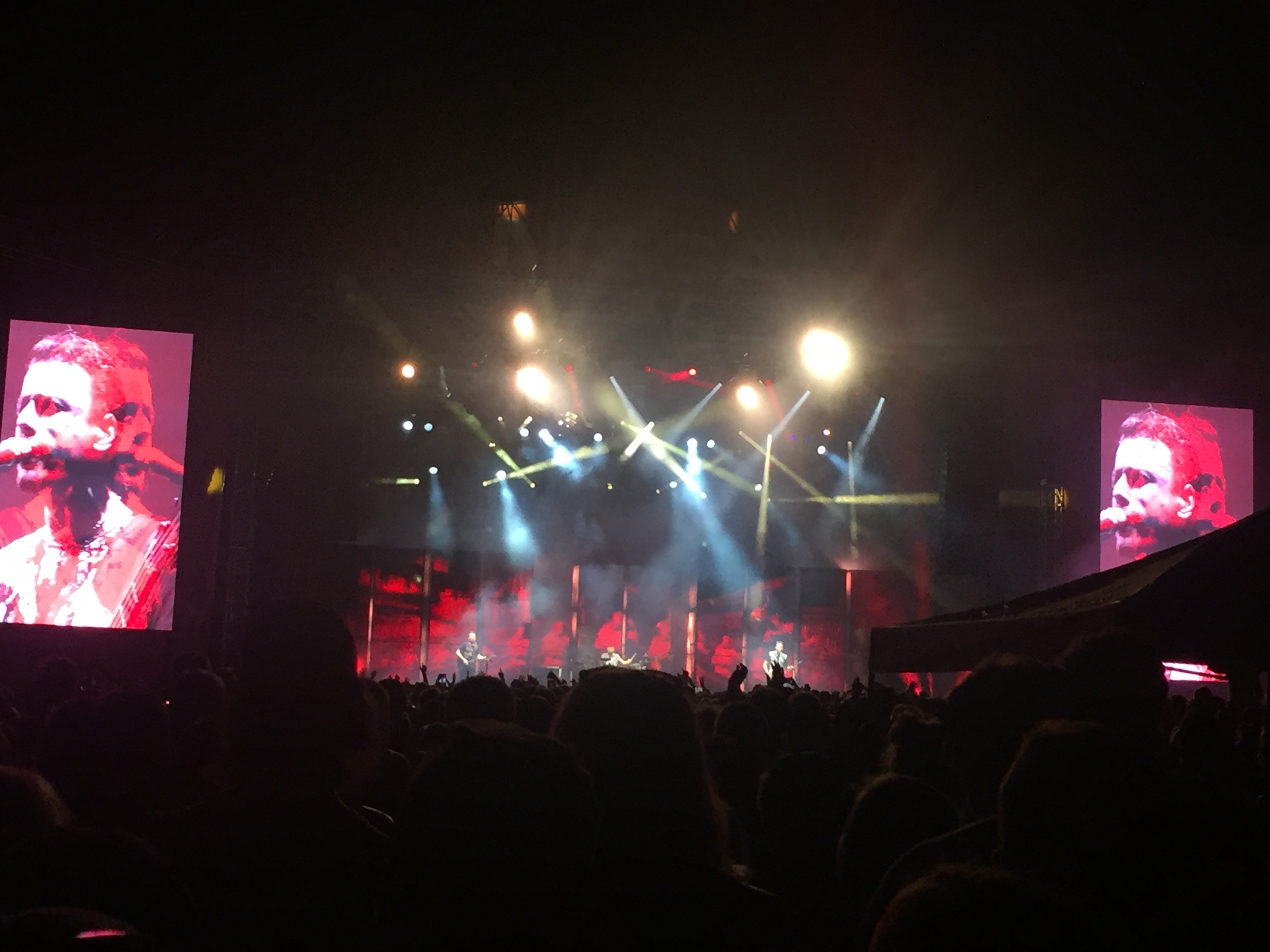
Muse are a very well liked band, and for very understandable reasons. They put on a high-explosive live show, complete with cool visuals, several screens, cameras on mic stands, and frontman Matt Bellamy wearing light-up shutter shades and shoes (maybe he’s really excited about Graduation‘s 10 year anniversary this year). They’re the rare 21st century band with multiple songs casual listeners will easily recognize, most of which sound quite good in a stadium (“Uprising,” “Stockholm Syndrome,” “Supermassive Black Hole,” “Knights of Cydonia,” etc.) while still being technically challenging to play or sing. If you put all of these factors together, they make for quite an enjoyable live music experience, one which I’m sure many of their fans at Bunbury quite liked.

Here’s the thing, though: I can say all of that and mean it, and there’s still this voice in my head that ends each sentence with, “But Muse kind of suck.” Sorry everyone I know, but they kind of do. I’ve tried unabashedly liking them, but I still feel like the average Muse song is a bunch of Guitar Center-friendly riffs strung together, and their best work can be described as an attempt to recreate the loud parts of OK Computer. Matt Bellamy may be a more virtuosic guitarist and singer than, say Jack White, Josh Homme, or Annie Clark, but he can’t write songs like they can. And it’s not like Muse are completely lacking in good or even great songs–“Starlight” was a treat, and “Supermassive Black Hole” is solid enough that it escaped Twilight with more dignity than Robert Patterson did–just that their hit-to-miss ratio isn’t great for a festival headliner, and they’re prone to between song guitar wankery. Even with pretty lights, “Knights of Cydonia,” and “Madness” with a surprise ending, I still missed Florence Welch.

6. The 1975 are That Band.
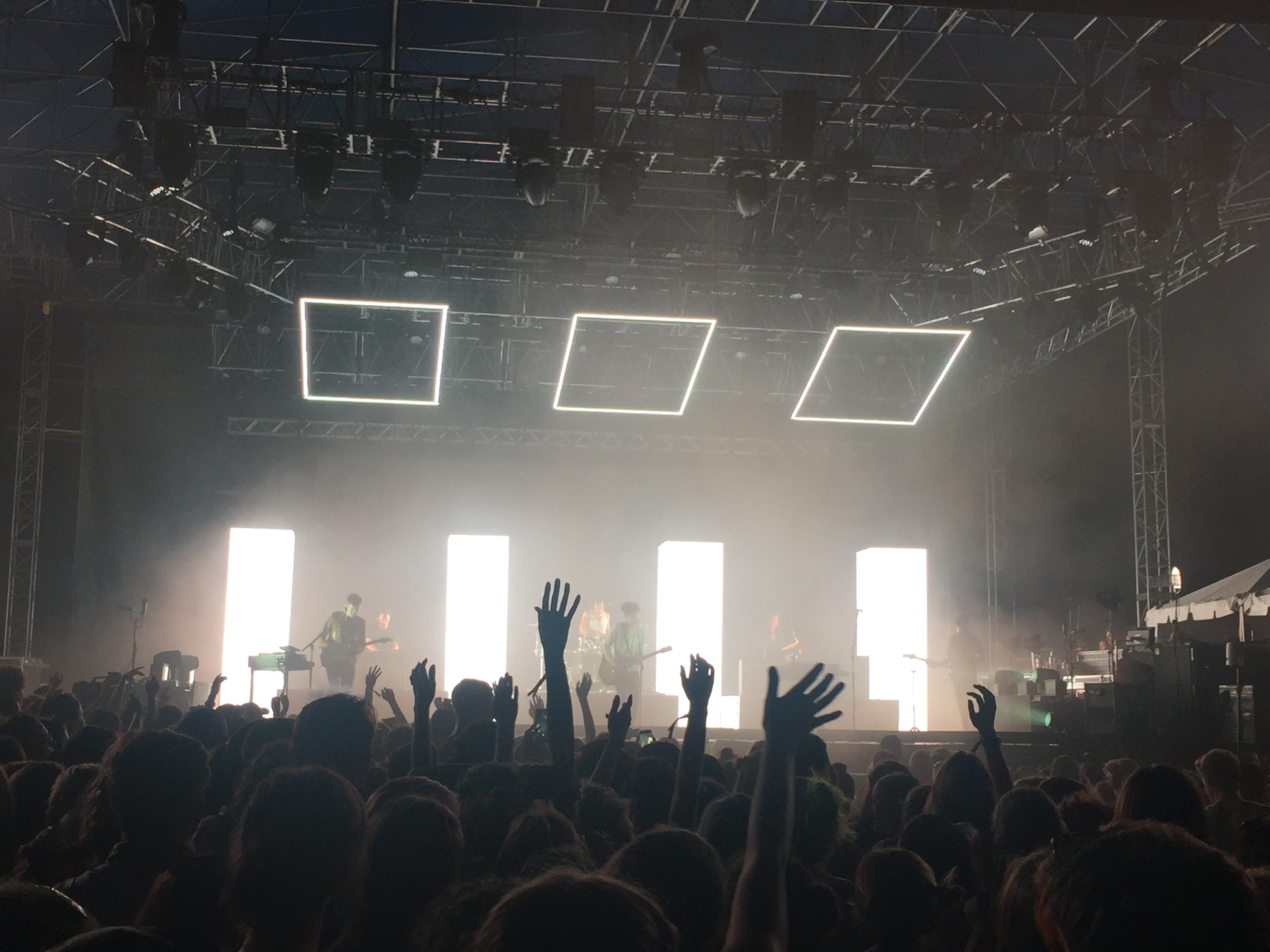
It feels wrong to entertain the constant bemoaning of the dearth of young, capable mainstream rock bands when The 1975 are right there. They have the songs (more on that in a moment), the all-consuming fandom, and the look of what you’d expect from a young person’s band; if these guys could notch a top 10 hit Stateside, that’d be it. Their live show checked every box: big structures, vibrant lights, and singular members lead by a cool-as-shit frontman. Matty Healy not only exudes charisma, he commits to making the disaffected British rock star bit work for him. There was a point during “Change of Heart,” I think, where he was ambling around stage singing, but he’d gotten a cigarette from somewhere and held it in the same hand as his mic, and another at the end of maybe “Loving Someone” where he started tossing roses into the crowd. It was the kind of shit that sounds (hell, is) ridiculous, but through sheer dedication, Healy made it work.

That same descriptor holds true to their music. I tried getting into I like it when you sleep, for you are so beautiful yet so unaware of it last year, but it didn’t really stick (I gravitated more toward Teen Suicide’s It’s the Big Joyous Celebration, Let’s Stir the Honeypot instead; even though they aren’t strictly speaking alike, both records are sprawling genre-crossers whose wordy exteriors betray vulnerability and probably multiple illegal substances); it turns out these songs need to be heard live. To paraphrase what music writer Steve Hyden said about Pearl Jam, I realize fans of every band say “they sound better live,” but in The 1975’s case, it happens to be true. All the moving pieces in their songs fall into place with tighter, louder, and more commanding rhythms and more powerful hooks, and older songs like “Girls” and “Heart Out” fit right in the set. And seeing The 1975 live meant hearing “Sex,” quite possibly one of the best arena rock songs of the decade, live. It also meant seeing one of my friends see one of their favorite bands live, and let me tell you, seeing someone else freak out over a fave is almost better than seeing your favorite.

7. Final Verdict
How I feel about this year’s Bunbury is kind of a head vs. heart situation. On one hand, the lineup never really gelled in a meaningful way, including a rare 0 for 3 on headliners, the undercard only worked in fits and starts, and the daily schedule always felt thin. Price is a factor, too, as both Riot Fest and Pitchfork Festival are comparable in ticket quality, but end up stomping the ‘bury in quality and quantity of bands, and the festival trades way more in veteran or up-and-coming acts than it does in the moment excitement. On the other, I had fun with the people I went with, and saw some bands I really wanted to check out. So ultimately, if you’re looking for a festival for the sake of going to a festival, I’d recommend somewhere else that’s a little more exciting and worthwhile, but if you like a few of the names on the poster, or know people who are going, it’s worth checking out. We’ll see how next year goes.

Posted in "Thoughts" | Tagged , , , , , , , | Leave a comment