Album Review: Foo Fighters – Sonic Highway

The Foo Fighters are in a weird place.

Ok, ok, a platinum selling, non-legacy actual rock band in 2014 is in a weird place to begin with, but Foo Fighters got here in a kind of odd way. They’ve spent almost 20 years as a ubiquitous band most people like, but could never love. This seems somehow by design and circumstance; the Foo’s greatest strength (and a bit of a liability) is in their knack for no-frills alt rock that feels refreshing in contrast to whatever else is on alternative radio, but can grow stale over the course of a full album (this is why, despite their best efforts on Wasted Light, The Colour and the Shape, and There Is Nothing Left to Lose, the band lacks a true, career defining record). And whatever fights they win on radio get lost within their peer group; The Foos can’t help but sound less, say, inventive than The Black Keys, or not as cool/critically respected as Queens of the Stone Age. The tradeoff is they handily top their peers in commercial and industry viability, which isn’t nothing, but way less sexy looking.

Frontman Dave Grohl seems aware of this. Instead of fighting (ha) it, he’s kind of embraced his place as rock’s Good Ol’ Boy; he’ll gladly extol the virtues of “real music played by real people”, help induct someone into the Rock Hall of Fame, or jump head first into trad-rock collaborations, all while pulling a younger audience. It’s not that Dan Auerbach and Josh Homme refuse to play the Grammys, but if you want someone to grab a guitar and have the time of their life rubbing elbows with Tom Petty and Paul McCartney, Grohl’s your man.

All this brings us to Sonic Highways, a Foo Fighters multimedia project that is literally about the awe-inspiring power and legacy of American Rock and Roll. The pitch for the project is intriguing enough: the band and producer Butch Vig blast out to a famous music city in America (Chicago, Washington DC, Nashville, Austin, New Orleans, Seattle, LA, and New York), spend a week chatting with blues/rock icons, and use that time as inspiration while they cut a song in a legendary studio featuring a prominent local artist. It’s the logical next step after the Fighters “back to the shack” approach on Wasting Light and Grohl’s Sound City doc project.

If we’re grading by execution of concept, Sonic Highways gets a polite C+. The regional flourishes are there once you’re aware of them, but no one’s going call “Something from Nothing” the sound of Chicago, or attribute any element of “In the Clear” to New Orleans. The Preservation Hall Jazz Band plays on the latter, but without knowing who it is, the track just sounds like Foo Fighters doing a passable E Street impression. More to the point, Grohl’s songwriting ambition outstrips his capabilities, and the lyrics sound like those on any of his other albums with grafted-on local nods that read as Genius 101 work. The track by track guests contribute flavor more than definition; “Congregation” is a power-pop Foos single that happens to have Zac Brown guitar leads over it, and you’ll only parse Ben Gibbard or Pete Stahl and Skeeter Thompson’s backing vocals on “Subterranean” and “The Feast and the Famine” respectively after the fact.

That said, downplaying the guest contributions plays to Sonic Highway‘s favor. Instead of their standard approach of 12 or so songs packaged together, Sonic Highways aspires to be an end-to-end album with fairly ambitious songwriting. This leads to a baffling first few listens because typically Grohl and company deliver hooks and choruses with an expediency not seen outside Amazon Prime. That’s not quite the case here, where half the songs push the five minute mark, between extended intros, mid-song jams, and slow builds. In places like big ol hooky-but-hard-to-hate closer “I Am a River”, it works, but the spacey, Seattle indie-tinged dream pop of “Subterranean” doesn’t justify the length. The Foos aren’t strangers to four and a half minute runtimes, so even with occasional bloat here, Sonic Highways doesn’t strike out nearly as much as I thought it would.

And there is some high level Foos material here. “The Feast and The Famine” passes the Foo Fighters Big Rock Single Test: even though it explodes exactly when/where/how I expect it to, I cannot turn this fucker down (past winners: “Bridge Burning”, “Stacked Actors”, “No Way Back”). In fact, the compact, punk-y “The Feast and The Famine” would work infinitely better than turgid classic rock FM fodder “Something From Nothing” as an album opener. There are also textured moments here bring back sounds not heard from the band in awhile; the jangle on “Outside” could fit on There Is Nothing Left to Lose and the aforementioned “Subterranean” is a lovely if over-long update on “Floaty” from the group’s self-titled debut. And while “I Am a River” is an awe-inspiringly corny lighters-in-the-air closer, the opening is quite pretty, and the song embraces the fact that this has always been a corny band.

The blatant awfulness of “Something From Nothing” aside, everything on Sonic Highways offers at least one promising aspect. Even if its just some above and beyond guitar soloing on “Congregation” or “What Did I Do?/God As My Witness” pulling off the combine-two-half-songs-and-hope-for-the-best strategy, it’s a decent album to hear in a sitting. It’s the album version of Interstellar: it’s an approachable, enjoyable bit of work that’s biggest downside is being far less brainy and important to listen to than it probably was to make. Three and a half out of five stars.

tl;dr: The Foo Fighters tried to make an honest to God album that mostly, kind of works. Just skip the opener. 3.5/5

Posted in Album Reviews | Tagged , , , , , , , , | 1 Comment

Radio Rant: Iggy Azalea ft. Rita Ora – Black Widow

Hello, and welcome to Radio Rants. Time to assemble, y’all.

First Clueless, now Kill Bill. There's a joke in here about Iggy only being successful by blatantly piggybacking off others. You can make it yourself.Well, this was basically pre-ordained. Whoever rules the summer, good or bad, is basically guaranteed a walk-off hit on their next single (see: Robin Thicke), and for Iggy Australia Azalea, that means “Black Widow”. Fun bit of trivia before we get to the song: “Black Widow” is actually the fifth single off The New Classic, and now Azalea’s doing a Super Deluxe Reissue in November with a few new tracks to get a little more life out of the album cycle. I don’t know if I should scoff at the blatant cash-in attempt, or admire the work ethic. Suppose it’ll just come down to how good the new stuff is. It’s going to have to be better than “Black Widow”, that’s for damn sure.

“Black Widow” has nestled as part of an all-female top 5 in the Billboard Hot 100 for the last month, and it’s the slightest of the bunch. “Shake It Off” and “All About That Bass” ace it in terms of catchiness, “Bang, Bang” is at least reasonably cozy all star pop, and “Habits” is flat out great. You don’t get much of that with “Black Widow”: the beat isn’t super catchy, nor the hook especially memorable, and I couldn’t tell you anything Azalea says in either of her verses. You could at least make a case for “Fancy” having some staying power (and nudging Charli XCX into the mainstream), but it’s hard to imagine anyone aside from, like, three diehard Rita Ora fans reaching for “Black Widow” in six months.

So, let’s look at Azalea first. “Black Widow” is an anti-love song; Azalea’s lover has done her wrong, she’s not gonna take it, and–hold up, this is the exact same shit she rapped about in that blink-and-you’ll-miss-it verse she had on “Problem”. It’d be easier to ignore the subject matter if there was any fire at all, but like “Problem”, Azalea’s first verse here is a forgettable bunch of bars with no particular flow or zingers in the bunch. The second verse is a little better with some more substantial lines and, more importantly, a varied flow and a kinda-clever chopped vocal break. But, like every verse Iggy’s had in the spotlight, it doesn’t make a case for why she should be there in the first place.

But, all things equal, Azalea makes a better case for her fame than hook-girl Rita Ora. Ora’s kind of like Jessie J with the talent:crossover desperation ratio flipped; they’re both competent British artists with middling careers at home that can’t take America due to lack of personality. Her song “R.I.P.” was half of a hit, but she’s never escaped her label as store-brand Rihanna. After what happened with Charli XCX post-“Fancy”, I wouldn’t be entirely surprised if she had a “Boom Clap” waiting in the wings, but I don’t know how well “Black Widow” sells it. It’s a decent hook (more in a second), but Ora can’t help but sound like Rihanna the way Riri mimicked Sia on “Diamond”. The hook doesn’t have the same immediately catchiness that “Fancy” had, it’s nice but disposable.

The only place where “Black Widow” lands is the beat. The verses have the same pop-trap foundation as “Dark Horse” (Taylor Swift missed an opportunity for a bass-heavy single named “Shadow Cat” or something), but slightly faster and with a better riff over the bass. But what really makes the song work is the vamping under Ora’s hook: handclaps and a snare push louder and louder over building synths on loan from Calvin Harris. Ora matches the music as it swells, and it’s kind of hard to not be at least mildly impressed as the whole thing peaks with, “I’m gonna love ya/like a black widow, baby”

I swear that it sounds better out loud.

Actually, what’s “love ya like a black widow” mean? As much fun as it is to pretend it was inspired by some really weird Avengers fanfiction, I doubt Ora and Azalea were inspired by BlackEye. Turns out it’s about the black widow spider, who, tradition has it, devours the male in the afterglow. I kind of get where Ora’s lyrics are coming from on that front (Nothing says “I’m gonna show ya what’s really crazy” like cannibalism!), but I’m not sure Azalea got the same lesson. Instead, Azalea seems just maybe a little upset you’ve been shitty about texting her back outside hook up texts, and might come at you like a dark horse eventually, but definitely won’t eat you. Getting some mixed signals.

Yeah, this song can bite me. Azalea still hasn’t turned in a solid performance on a hit single, and her Designated Brit Hook Girl impresses less this time, too. The beat’s kinda nice, but I can’t say this is anything I can see people coming back to once its time on the charts is over. Hopefully, no pleading cash-ins take its place once that happens.

Posted in Radio Rants | Tagged , , , , , , , , | Leave a comment

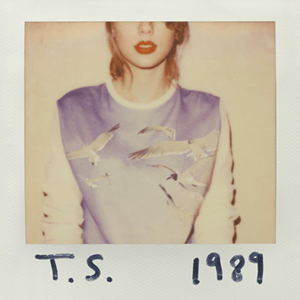
Album Review: Taylor Swift – 1989

Taylor Swift has released an album every other fall since 2006.
This is impressive because 1: Swift is like, a year older than I am, and it’s an act of divinity if I keep the same workout routine for two weeks, and 2: her career is devoid of artistic misfires or commercial slumps; she can not only outperform you critically, but outsell you in her sleep. And now, she’s consciously pushing all that forward. Since the minute it was announced, Swift has called 1989 her “first documented, official pop album”. We’ll get to what that means eventually, but, more prominently, 1989 is Swift’s first “I’m Trying” album. Red covered more ground, and Fearless and Speak Now might have longer run times, but 1989 is a more singular capital-A Album made with the intent of taking over the mainstream by knocking down the front door. Forget trying to upset the status quo, Swift wants to be the status quo.

I know that 1989 is an “I’m Trying” album because it’s also subtly a concept album. In hindsight, it’s a little remarkable that it took imagery-and-narrative-songwriter-extraordinaire Taylor Swift five go-arounds to do a concept album, but hey, nothing says “I’m Trying” like telling a story. And, while failed romance isn’t new territory in the Swiftian canon, there’s an arc to 1989 her other albums lack. “Welcome to New York” is mediocre as a song/ad for the city, but as the opener sets a backdrop for the rest of the album (it also, you could argue, establishes 1989 as Swift’s version of the Berlin Trilogy). “Blank Space” and “Style” detail the passionate start of a relationship, even if Swift knows it’s a bad idea going in. The rest of the album sees the couple fall apart like a ten dollar dress (“All You Had to Do Was Stay”), plead and try to make up (“Wildest Dreams” and “How You Get the Girl”), before ultimately deciding that shit just isn’t worth it on closer “Clean”. Swift’s done big, rousing closing songs before, but part of what makes the conceptual difference is that “Clean” is a definitive end to an arc that started with “Blank Space” (additionally, 1989 has that “We’re trying to be dark and it isn’t working” lull near the end that plagues most concept albums). If you want to explore the “1989 as a concept record” angle more fully, Tom Breihan writing for Stereogum expands on it here in a piece that’s equal parts brilliant and overkill

No “I’m Trying” album is complete without bringing in someone next level, and when you’re Taylor Swift, next level means next fucking level. 1989‘s production credits reads like an All-Star list of pop producers: Max Martin, Shellback, and Ryan Tedder lead a team of pop-veterans; Swfit’s buddy/Bleachers frontman/fun. guitarist Jack Antonoff has two credits, and Imogen Heap (your guess is as good as mine) and longtime collaborator Nathan Chapman turn in a song each. On one hand, this is a smart move, because most everyone here has pretty proven results, but on the other, this is probably the most conservative group of hitmakers you could assemble.

Now we’re getting to “first official, documented pop album” territory. Swift’s always been a pop artist; even when they were slathered in fiddles an’ lap steels, her hits stuck because they were catchy, not because they were phenomenal examples of the country genre (tellingly, the country music institution only gave then-teenage Swift attention once she started printing money for them).

The crucial difference is that 1989 has beat machines instead of drums, guitars used for texture only, and synths just about everywhere. But, similar to Red, Swift doesn’t really let the new setup change how she writes; these are still Taylor Swift songs. “Out of the Woods” as produced by Jack Antonoff sounds like festival hipster pop akin CHVRCHES, but with its dramatic bridge, massive scope, and intensely personal lyrics, it could easily pass as an “All Too Well” style ballad on another Swift album, and the venom spitting “Bad Blood” is basically “Mean” if it sold its banjo and bought a turntable.

Does it work, though? Swift and her collaborators want to take over the radio with a sleek throwback record, not a contemporary playlist of bangerz. In light of that, the hooks on 1989 (for the most part) aim deep as opposed to fast; the full, mind-invading catchiness of these mid-tempo synthpop tracks doesn’t kick in until a few listens. It makes sense: play the long game to stage a coup, but it also means that 1989 can read as a bit flat or boring on the first few listens. But, it doesn’t register as boring the same way that Prism did, because even if “Style” or “I Wish You Would” don’t grapple your ears into submission right away, there’s enough substance to keep you coming back.

This happens more frequently in the album’s first half, where in addition to highlights “Out of the Woods” and “I Wish You Would”, you’ve also got the sun-kissed “Style” and mercilessly catchy “Shake It Off”. “Blank Space” stumbles a bit, but gets saved by a minimal beat, while “All You Had To Do Was Stay” is a tolerable album cut. The top half has sturdier pop songs, but can feel kind of uniform. From “Bad Blood” onward, 1989 is a little more off the rails, but brings back diminished returns; atmospheric electro-ballad “This Love” and Imogen Heap backed “Clean” are the only clear cut “good” songs. The rest plays out more as “interesting but forgetful”. “Bad Blood”‘s smooth instrumentation doesn’t mesh with the shade thrown in the lyrics, although the chant chorus is a perfect fit (also, get ready to see “Still got the scars in my back from your knives” in passive-aggressive Facebook statuses). Twitchy media paranoia on “I Know Places” is more interesting as a thinkpiece on Swift’s state of mind than as a listen, while “How You Get the Girl” is an utterly shameless lobotomized retread of “boys and girls” pop that made her in the first place. “Wildest Dreams”, all romantic cooing and rosy cheeks, is such a Born to Die/Paradise Lana Del Rey pastiche that I’m surprised she isn’t a credited writer.

“Wildest Dreams” is as good a time as any to examine the peculiar way Swift writes intimacy on 1989. She’s a grownass woman with a portion of her fanbase that’s aged as she has, while she’s simultaneously portrayed as the ultimate good girl with lots of teen and younger fans who still seek out her more chaste material. The challenge presented to her is how to write an album that appeals to both, not to mention one that’s ostensibly about a physical fling that went bad. “Blank Slate” and “Style” show how she balances the two throughout; there’s the self-aware, jaded cynicism (“Got a long list of ex-lovers that’ll tell you I’m insane”) that tries not to get attached, but the heat-of-the-moment greatness that sounds romantic if you toss it in a big enough chorus (“You’ve got that James Dean daydream look in your eye/And I got that red lip classic thing that you like”). Swift still at least writes like she believes in this stuff; we’re not at “Fuck and Run” level yet. She handles the sexier recounts by getting as vague and surface level as possible: there’s no bodies touching, just tight little skirts and red lipstick. It lends some of the material a more staged feeling, in contrast to emotional pleas scattered throughout. It doesn’t feel fully organic, one of the worst things you can say about a Taylor Swift record.

Bringing it all home, 1989‘s weakness is that for how much of an “I’m Trying” album it is conceptually, that ambition doesn’t always translate to the material. Outside of “Hey Mickey” redux “Shake It Off”, the tempo never picks up; nothing here goes for the throat. In my music library, the album naturally plays into Tegan and Sara’s Heartthrob, and that album’s opener “Closer” is exactly the kind of raved up new wave jam that’s missing here. Not that it’s an entirely bum trip: “Out of the Woods”, “Style” and “I Wish You Would” are all keepers, and there’s a strong sense of melody throughout. Swift has yet to make a bad record, but there’s something cloying about 1989 that holds it back from the takeover it wants to be. Three out of five stars.

tl;dr (but actually): Taylor Swift tries hard in concept, not hard enough in practice, 3/5.

Posted in Album Reviews | Tagged , , , , , , , , | Leave a comment

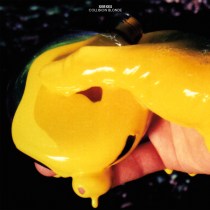
New Music: Xerxes – Collision Blonde

NSR126For how much the internet laments that each of us is supposedly disappearing down our own music rabbit holes, there are more and more bands these days branching out of their niche subgenres, and making work that appeals to a variety of tastes. To wit, Louisville based hardcore group Xerxes, with their new album Collision Blonde.

Xerxes is a hardcore band by definition, and while there’s no way to dispute that, you can’t help but think there’s something evolved about Collision Blonde at the same time. Hardcore’s famous low-end is still present (and thicker, thanks to clearer production); it pushes the dread on opener “I Was Wrong” to the boiling point, and the menacing “Knife” is defined by its tom-tom heavy sound, feedback squalls, and teeth-grinding bassline. The musical tension that snakes through the entire album was present–but not as fleshed out–on the band’s more traditional hardcore release Would You Understand? Here, even though nothing gets as fast as “Grinstead”, Collision Blonde has an intensity that dwarfs its relatively short (28 minute) runtime.

As I was saying, Collision Blonde feels like more than “just” a hardcore album, in no small way because of its guitar parts. More frequently than not, the guitar sounds like shoegaze resisting submission cut with noise rock level urgency; think the guitars on Deafhaven’s Sunbather cut with some The Cure in for texture, and you’re just about there. They show up in proper freakout mode with “Criminal, Animal” and “A Toast”, the first two fully structured songs here, establishing a mood for the entire album. “A Toast”, in particular, is a standout cut; the bass and guitar feature an honest to God hook at first, then the song becomes a rising spoken word breakdown, and finally exploding into a thirty second onslaught of tortured screams and furious playing that doesn’t just sound huge, but oddly catchy. It’s the kind of thing you can’t play quietly.

In addition to micro bursts clocking under or around two and a half minutes, Collision Blonde has a few slowburners. The goth rock-tinged title track stretches out for four tense minutes at mid tempo, alternating between (relatively) light drum and bass grooves and intermittent guitar explosions, with the vocals being the only constant. It’s a solid demonstration that Xerxes can make longer songs work. Four and a half minute closer “Nosedive” reigns in some of the experimentation for one last hardcore workout; there are a few dynamics at work and some deft drumming and feedback, but the song sounds restrained throughout with a dash of dread before ending on a repeating coda of “Can’t make it stop” and feedback. Other experiments include “Use As Directed” and “(but here we are)”: the former is a drum and harmonic soundscape with quiet spoken vocals over distant screamed ones, a neat bit of studio work. The latter is more fully formed instrumentally, but the mumbled monologue doesn’t latch onto anything substantial. It’s a cool idea, I’m just not sure if I like the execution.

But there’s plenty I like about Collision Blonde overall. The title track and “A Toast” are both top notch, and “Knife” and “Chestnut Street” lead the charge on a number of other solid tracks. As is the case for most hardcore, the vocals are going to be the make or break for anyone unfamiliar with the genre, but Xerxes’ throat shredding, barrel chested roar is actually less abrasive than most, and some varied deliveries make this fairly accessible for the genre. It’s an ideal record for reaching punk or alternative rock fans looking to dip into another subgenre; there’s enough traditional hardcore here to give you a taste, but enough that’ll sound familiar to just about anyone to make Collision Blonde sound inviting. Bring the kids, it’ll be fun. Xerxes get it right: just because your album is an intense work of existential anguish, it can’t be infinitely listenable at the same time.

Collision Blonde is out now on No Sleep Records, follow Xerxes here on Facebook.

Posted in Album Reviews, New Music | Tagged , , , , , , | Leave a comment