Album Review: Madonna – MDNA

Modern Madonna makes an interesting pop star, if only for the reason that she’s in a unique situation: in a time other performers are called “veterans” if their first single was released in the 90’s, her debut album came out in 1983. At this point, it doesn’t feel like she has to compete with other pop stars, but with herself; she has to prove that she still has that essential pop It that keeps her relevant.

There’s no real other rationale than a search for validation that could justify a first single like “Give Me All Your Luvin'”, a piece of pop fluff so mechanically sugary that whatever Disney starlet that’s trying to break out at the moment would pass it up. Second single and album opener “Girl Gone Wild” doesn’t fair much better, trading Nicki Minaj and M.I.A.’s sorta-interesting cameos for a song that’s a little sturdier, but no more memorable. Madonna’s stayed in the game so long by being smart, and so far, we haven’t seen that in her MDNA singles.

But, over the course of the album, she does take a smart, albeit, safe route. MDNA is essentially Madonna Goes Clubbing, especially for its first half. She blends her normal pop sound with club synths, drum beats, and a little bit of dubstep. It pays off best early in the one-two of “Gang Bang” and “I’m Addicted”. The former is the record’s weirdest track by far (and gets out of the way early at track number 2): Madge mutters and snarls her way through the first three and a half minutes of revenge fantasy before song goes all out on a dubstep breakdown. But that’s not even the weirdest part of the song: the song’s extended outro consists of Madonna shouting “Die, bitch! Drive bitch!”, complete with car and gunshot noises. “I’m Addicted” is a more traditional (but rather enjoyable) club track with stuttering synths and digitized vocals. Produced by Italian DJ duo the Benassi Brothers, the song’s a standout.

After two experimental and somewhat rewarding tracks, the album retreats back to too-fluffy pop. Despite an ok hook, cliche-storm “Turn Up the Radio” is a joyless listen, and the aforementioned “Give Me All Your Luvin'” is possibly the dullest song made by three of music’s leading women. Nicki Minaj gets to play redemption later on “I Don’t Give A”, even if Madonna’s lyrics on the same song get into cringe territory.

Lyrics are one of MNDA‘s biggest obstacles. As mentioned, “Turn Up the Radio” is a “just listen to the music, it’ll be ok!” anthem 15 years past its expiration date, and “Girl Gone Wild” is just as erotically lame as the title would imply. Clunky name drops tarnish the otherwise really enjoyable slowburning, New Wave-inspired “Superstar” (sample: “You’re Abe Lincoln cuz you fight for what’s right”), and lyrics on “I Don’t Give A” approach Totally Radical levels of gettin’ with it (sample: “Working out/Shake my ass/I know how to multitask” and “Tweetin’ on the elevator”), made only worse by Madonna rapping them. At the same time, “Love Spent” is a pretty sharp tell-off to Madonna’s ex-husband Guy Richie, and “I Don’t Give A” handles the divorce, too.

The last three songs on MDNA are probably the strongest. Produced with longtime collaborator William Orbit, they blend electronica with some of Madonna’s 80-pop styles in a way that pays off. “Masterpiece” is the strongest of the three; “Love Spent” is just a little bloated, and “Falling Free” doesn’t have a solid hook to keep its feet on the ground for its five minute runtime.

Those last three songs are what essentially saves an otherwise uneven album. For all the flustered or uninspired moments across MDNA, the album also turns up enough fun tracks that it’s worth checking out. When it plays safe, the record loses any substance, but when it plays smart, it’s quite good. Too bad the two are too well mixed, three out of five stars.

tl;dr: 12 albums in, and Madonna can still hold her own, 3/5

Posted in Album Reviews | Tagged , , , , , , , , | Leave a comment

Feedback: blink-182 – blink-182/untitled

Today, I finally get to launch a new feature: Feedbacks. In Feedbacks, I’m going to look at an unpopular album by a big group, and sort-of review it, but really look at the culture and consequences around the album, as well as any impact it had (and if I had any personal experience with it). First up: blink-182’s untitled/self-titled, depending on who you ask.

I played baseball in grade school. In fifth grade, I remember a friend’s dad driving me and my friend down to a far-off game, and we were listening to the local pop station. At the time, I was almost entirely unfamiliar with music: an only child living with a single mom who listens to Jammin’ Oldies and the local soft rock station has a lot of uphill to climb to music knowledge. But the DJ announced that the next song was by blink-182, and my ears perked up. I’d heard of blink-182 enough to know that they were a “cool” rock band, and the kind of thing I should know to be “cool”. The song starts up, and I hear drum brushes, acoustic guitars, and double bass. I was taken aback.

I imagine that a lot of blink fans at the time had a similar reaction. Come 2003, blink was one of the biggest acts around, and known for crude humor and catchy, radio friendly pop-punk. Hearing a somber, acoustic love song wasn’t a single that fans anticipated, but that’s what “I Miss You” was. After 2 scrappy 90’s pop punk albums and 2 albums that defined pop punk for better and worse in the early 00’s, blink-182 stood apart as The Serious, Experimental One.

It doesn’t exactly start that way, though. Lead single/first track “Feeling This” was still a typically pleasing mid-to-late-era blink single, and second cut “Obvious” riffs awfully hard. Other singles “Down” and “Always” come a few shades darker than “The Rock Show” or “M&Ms”, but are still plenty catchy. And “Go” and “Easy Target” are pop-punk by numbers.

It’s not until “Violence”, built on a drum loop and a nervous riff out of early Modest Mouse, and features DeLonge almost rapping, that things get weird. And even then, the song still has an old blink style chorus. Travis Barker, who’s always had an ear for hip-hop, gets to jam over the piano/drum/bass groove of “The Fallen Interlude”. The biggest “what the shit, blink?” moment comes during “All of This”, a moody, spacey, acoustic-tinged number that doesn’t get weird until you hear the Robert Smith contributing vocals.

Featuring Robert Smith on blink-182 is pretty on the nose for this record. The album’s tendency towards atmospheric keyboards, flanged guitar, and thematically dark lyrics show the influence of Smith’s The Cure all over. Even more than the acoustic guitars, keyboards, and drum loops, what’s still the most surprising part of blink-182 is how dark and (relatively) mature it is. Even when blink did serious songs in the past, they still felt adolescent; “Stay Together For the Kids” came from the kids, and “Adam’s Song” starts losing relevance once you’re old enough to legally drink. By comparison, the confusion of “Stockholm Syndrome”, the loneliness of “Asthenia”, or watching a relationship crumble like “Always” looks at things from a noticeably older view. It’d be like running into your high school’s class clown 3 years after graduation, but he’s started using black nail polish and does unironic performance art.

Which is why the album makes more sense in 2012 than it ever did in 2003. Blink’s first post-reunion album Neighborhoods shares more with blink-182 than anything else the band has done, and the echoing, spacey guitars and atmosphere of “Asthenia” and especially “I’m Lost Without You” hint at DeLonge’s future band Angels & Airwaves. Tensions filled the band after blink-182, and it’s hard not to recontextualize the albums themes of tense and failing relationships in light of the fact that, less than two years after the album was released, the band broke up.

One surprising fact that I dug up while researching blink-182 was that despite the panning it got from fans, critics regarded it as not being that bad. Allmusic, generally one of the fairer critic sites, gave it a 4/5, as did the hip Village Voice. Looking back on it, blink-182 is a transition record marred only by too much navel-gazing, and its transitional end-point coming out 8 years later. The album’s black nail polish also led the way for the eyeliner of some other bands down the road.

Posted in "Thoughts" | Tagged , , , , , | Leave a comment

Album Review: The Hunger Games (soundtrack): Songs From District 12 and Beyond

I haven’t had a chance to see The Hunger Games, the newest big adaptation of young adult fiction, but at least from marketing, it seems to want to be the sweet spot between the Harry Potter and Twlight franchises, at least in tone. From what I’ve seen, the series wants to hit the brooding tone of Twlight, but without the bloated sense of self-importance, and the in-universe marketing of Harry Potter.
And Songs From District 12 strikes me as wanting that same balance. Looking down the list, the album leaves the same moody taste as any of the surprisingly quality Twlight soundtracks, but seems to have a stronger conceptual tie than “What are the kids listening to these days?” Going off any of the theoretical Hunger Games maps, District 12 is placed right in the heart of the Appalachian Mountains, where American folk has its roots. Calling the soundtrack Songs from District 12 and Beyond is deathly accurate; folk dominates the album, but the oppressive, dark air of dystopia hangs all over these songs.

The ideas merge strongest on opener “Abraham’s Daughter” by Arcade Fire, which is built lyrically in Biblical turns (the story of Abraham) and features acoustic guitars, but also has a martial drumbeat. After that, the ideas split off to varying degrees, with the folk getting stronger representation than everything else. Contributions from The Secret Sisters, Neko Case, Carolina Chocolate Drops, and Punch Brothers are basic meat and potatoes acoustic folk/Americana tunes, but they make for great listening when you want something calm. Carolina Chocolate Drops’ song “Daughter’s Lament”, is of particular note; hearing an a capella spiritual sing about mockingjays is disarming, and really enhances the Hunger Games world.

But the bigger names do most of the album’s heavy lifting. The first single, “Safe & Sound” by Taylor Swift featuring The Civil Wars, is still one of the more striking songs from the project. The warm melody and acoustic guitars sound truly safe and sound against the sparseness of the other instruments, and the harmonies added by The Civil Wars make for a beautiful last minute. As mentioned earlier, Arcade Fire’s “Abraham’s Daughter” kicks the door in. Mirana Lambert goes old-time country on “Run Daddy Run”, and The Decemberists add a bit of rollicking energy with “One Engine”. On their own on “Kingdom Come”, The Civil Wars create a song filled with passion and heartbreak.

The two most surprising entries, though, come from the most bizarre contributors: Kid Cudi and Maroon 5. The former has “The Ruler and the Killer”, a metallic, riff-laden cut filled with tribal tom tom beats and snarling from a surprisingly alert Cudi. If the bulk of the songs on Songs From District 12 are from the titular rustic but charming district, “The Ruler and the Killer” reminds us that the ruthlessly technological Capitol is still looming. It’s one of the few songs here that sounds truly dystopian. Meanwhile, Maroon 5’s “Come Away to the Water” is probably the most un-Maroon 5 song that Maroon 5 has ever written. It fits in almost too comfortably with the fingerpicking, gentle drumming, boy/girl harmonizing songs found elsewhere on the soundtrack, but then again, a typical Maroon 5 track would be blatantly out of place (despite this, though, “Come Away to the Water” still has some nice Maroon 5 bounce to it).

Songs From District 12‘s biggest enemy is probably its own length. 16 songs long with an average length pushing 4 minutes, the album meanders in the woods of District 12 a bit too much for its own good. None of the songs are bad, per se, but some lean hard on folksie balladry for a free pass. Even with death and darkness on all sides, The Hunger Games is a story about people who continue on, and that same sense of warmth pervades the otherwise dark passages. It’s sort of a redemptive charm, and makes for great meditative listening. Four out of five stars.

tl;dr: Teens killing each other? Pass me the acoustic guitar, 4/5.

Posted in Album Reviews | Tagged , , , , , , | Leave a comment

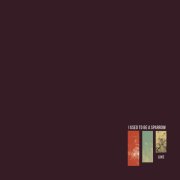
New Music: I Used To Be A Sparrow – Luke

One of the false ideas I had when I was younger was that music had to be inaccessible and challenging to be edgy or attention-getting. But I’ve learned that sometimes, it’s not about doing something different, but doing something well. Such is the case with Swedish/Italian band I Used To Be A Sparrow. A duo comprised of Dick Pettersson and Andrea Caccese, I Used To Be A Sparrow (great name) are good ol’ fashioned indie rock. Or, at least as good ol’ fashioned as you can be in a subgenre that’s around ten years old.

On Luke, the band takes a mostly post-punk approach. The production is crisp, if a little underproduced, giving the instruments plenty of open room to breathe. And boy, do they open up; almost every song on Luke has some reverb tinged-guitar ringing out while the vocals belt without abandon. Keeping the skyward reaching vocals and guitars grounded is some propulsive but always skillful drum work. The sound is anything but basic though: both Pettersson and Caccesse layer vocals, guitars are often multitracked, and every now and then, extra effect makes its way into the mix. Despite this, Luke never sounds cluttered.

If there’s one thing you can say about I Used To Be A Sparrow, damn if they aren’t consistent. The above paragraph describes the majority of Luke‘s sonic template, for better and worse. On one hand, the quality never really suffers, and it’s hard to pick out tracks that are filler. On the other hand, it takes some songs awhile to come out of the woodwork. Most begin with a lone guitar intro, maybe some vocals, and fill themselves out in the first minute. It’s not a bad sound, but there’s a lot of potential and room for exploration.

But that’s not to say that Luke doesn’t set the ground-plan for IUTBAS’s sound well. Lead single “Life is good” summarizes the band’s constantly swelling, liberating sound in the most selling way. Again, the quality is too consistent for any real strikeouts, but I feel like the mid-album stretch of “Hawaii”, “Lovers on the Moon”, and “Moby Dick” is the most enjoyable part of the record. “Hawaii” sounds almost meditatively calm with tight-packed but nimble guitar work and a strong melody. “Lovers on the Moon” has the first acoustic guitars on the album, and shifts the focus onto gorgeous atmosphere; perfect night music. “Moby Dick” simply fires on all cylinders across IUTBAS’s default sound. Other highlights include “Give It Up”, which has a more concentrated sound than most else here, and closer “Alaska”, which lets Luke end with a burst of energy.

Even if it isn’t always happy, Luke feels very much like a hopeful record. Even if they sound dejected, there’s always something in these songs that looks up, especially on “Life is good”. I Used To Be A Sparrow calls Luke “honest songs and powerful melodies”, and it’s a dead-on assessment: they sing with reckless abandon, and it’s hard not to join in.

Overall, Luke is a promising debut that shows a band with plenty of potential, while being enjoyable in its own right. Even if it’s a little samey, the songs develop and go somewhere, and never overstay their welcome (11 songs in 35 minutes). And plus, there’s just not a singular weak spot on the thing. The group only formed in December, so things can only go up from here.

Want to stay up to date? Like I Used To Be A Sparrow on Facebook.
To buy a physical or digital copy of Luke, or get single “Life is good” and b-side “Mikkael” for free, hustle on over to the group’s bandcamp page. You won’t be disappointed.

Posted in Album Reviews, New Music | Tagged , , , , , , | Leave a comment