Album Review: Father John Misty – Pure Comedy

“The comedy of man starts like this/Our brains are way too big for our mother’s hips”

So goes the first lyric of Pure Comedy, and however deep you just sighed or heartily you chuckled is going to dictate how you feel about folk rocker Father John Misty’s newest work overall. Since making it to the alternative major league with 2015’s I Love You, Honeybear, Misty (who is really Josh Tillman but extra Father John Misty) has garnered a reputation as an acerbic indie rock provocateur whose irony-laced comments and interviews are as clever as they are insightful and self-aware. That character was up and down Honeybear, but since he made that album and 2012’s Fear Fun in relative obscurity, it wasn’t the main draw.

The same can’t be said about Pure Comedy, which pushes Father John Misty’s persona and philosophy, along with all of his worst traits, all the way to the front for a dispiriting, muddled album. It’s a project informed by Honeybear’s lousiest song, where lush but staid instrumentation and sleepy pacing aren’t able to support Misty’s sardonic commentary or hide the seams in his sometimes kidding/sometimes honest character/not character. The album is, in short, a lot, so this might take some digging.

You can’t get to what’s slippery and dissatisfied about Pure Comedy without first looking at what’s slippery and frustrating about Father John Misty. The core issue with the persona is that it sort of acts like a fog of war: by wrapping every statement, lyric, and move in a layer of smarmy, sarcastic, self-awareness, the listener has to calculate how ironic or sincere he’s being at any time. As it happens, the math usually shakes out to whichever is easiest on Misty in that moment. So you’re left wondering how many questionable decisions here be attributed to some sort of trollsy metagame, how much is in service of some oblique point about artistry, and what’s just poor decision making.

Like, okay, here’s an example. Pure Comedy is 75 minutes long. This length is a byproduct of ho-hum tempos and songs that are as overwritten as they are caustically doomsaying. Is this:

A: self-indulgent and pretentious?
B: a clever, clever ploy to by Misty to make an album that could be described as self-indulgent and pretentious in order to dupe the self-indulgent and pretentious among us (hi!) into calling it self-indulgent and pretentious, thus outing themselves as such?
C: [undoes top shirt button, sips double IPA] A meta-commentary on the commodification of independent music in our stream-driven attention economy whose length is meant to disrupt your infinite scroll of Total Entertainment with Necessary Art that will galvanize your latent existentialist angst in this uncaring world?

None of this would happen with any other artist, but I’ve seen people argue all three reasons out in the wild and it is exhausting. Well, welcome to Fog of Misty. It comes from the fact that he uses his self-awareness chiefly to defuse/preempt any criticism: his argument is that he explores other themes or topics as a way to process his inner-turmoil and neuroses, so when he eviscerates someone up and down in song (see: “Ballad of a Dying Man” here, “The Night Josh Tillman Came To Our Apartment” on Honeybear) he’s really just fucking around while saying all of that about himself, so anyone saying anything about him is really saying that about themselves, which means he wins because…he said it first? I don’t know, that part’s never been clear, just “I said that you hate me, so you hate you, I win.” And if you take this line of thought to its logical conclusion, you get a guy who believes he knows how wrong it all is, and if you don’t like it, then he’s proved how right he is because you hate him. You get Fred Durst with a masters degree. But, if you try to make sense of Misty’s logic, then you’re accused of either misreading him or not getting the joke that clearly he has no rhyme or reason, and fuck you for trying to understand it. This is what I mean by “whatever’s easiest:” if you write Misty off wholesale, then you lose because he anticipated it, but if you examine whatever the fuck that means, then you’re not getting that he has no point.

Which, getting to Pure Comedy, is such a fake out because Misty clearly has a point. The point of this album–stated in as many ways as possible–is that life is a bunch of happenstances daisy-chained together in a world that likely hates you, and any attempt to enforce your own narrative, epiphany, or belief system on it is hilarious. This view came to him, according to “Leaving LA,” as a kid, when he nearly choked to death in JC Penny while Fleetwood Mac played (assuming he’s being honest, there’s that Fog of Misty). I know every review says this, but “Leaving LA” is emblematic of Pure Comedy as a whole: there’s a fascinating essay/”Thread, 1/?” in the lyrics that cannot overcome the fact that it is a hellishly tedious 13 minute song with virtually no melodic invention or musical variety. If Misty’s your man, then you’ll love it, but otherwise it makes the go-forever AutoTune fade out of Kanye’s “Runaway” look measured by comparison.

The other thing that dulls the impact of “Leaving LA” is that it’s revelations end once the song does. There’s a lot of pathos there, but none of it gets revisited once the song peters out mid-thought. How hard would it be to tie some of the self-criticism from “Leaving LA” into “The Memo”’s bridge? There, Misty digitizes his voice to detach from his art, and includes robo-snippets saying “This guy just gets me” and “This is my song of the summer.” It’s a compelling moment as is–the listener’s forced to reckon with the fact that artists bare their souls on a track, and we’re like “Cool, lemme put that on the Chill Indie playlist”–but connecting it to “Leaving LA” would make both songs stronger. Really, for someone as smart and operating on a Grand Scale like Misty is on Pure Comedy, not leaving breadcrumbs back to “Leaving LA” is a key missed opportunity. It’d also do wonders for cohesion.

I realize this is granular detail, but it leads to Pure Comedy’s death by 1,000 cuts. Everything about this album’s rollout has signaled that Misty wants Pure Comedy to be his philosophical masterpiece and crowning artistic achievement, but saying that doesn’t make it so. It’s just not a conceptually sound enough record for it. And like…okay, I legitimately feel like a dick saying this, but we can agree that the cultural commentary here isn’t that deep, right? Don’t get me wrong, Misty can write clever one-liners like the best of them (look at the sheer economy in “Bedding Taylor Swift every night inside the Oculus Rift”), but underneath those zingers are fairly boilerplate observations. “Put your phone down.” “Buzzwords and social constructs, right guys?” “Anyone can commercialize art.” “Live, laugh, love.” It’s 75 minutes of those “Whoa, makes you think” Banksy-lite viral posts that make the rounds. It’s trite commentary being treated as, in the album’s own words, “sacred text.”


I Love You, Honeybear tossed barbs about romance in every direction, but did so as a reaction to Misty trying to outrun his own emotions and sentimentality. That run culminates in “Holy Shit,” where he riffs on society’s absurdities before declaring to his wife “Maybe love is just an economy based on resource scarcity/But what I fail to see is what that’s gotta do with you and me” in a moment of vulnerability and surrender regardless of how illogical love is. He completely pulls off the twist because it matches the album’s emotional beats, and follows the personal stakes throughout (also not hurting things: “Holy Shit” is quite possibly Father John Misty’s best song).

Pure Comedy tries something similar with “In Twenty Years Or So,” where after 70 minutes of cantankerousness, he surmises that well, we’re supposed to blow each other up in 20 years, so you might as well treat getting a drink with someone special like it’s “a miracle to be alive” and that “There’s nothing left to fear.” It’s supposed to be another twist ending, but it feels like a cop-out. Misty spends too long making too damning a case against this cruel planet of Earth for one last-minute reversal, an early tossed-off lyric, and a sleepy number about his wife to walk back everything back. He sounds far more gleeful and convincing calling humans “demented monkeys” and Earth “This godless rock that refuses to die” than giving a reason to go on. And again, Fog of Misty bites him in the ass here; it’s totally possible to read “In Twenty Years Or So” as a preemptive “Well, actually” against criticism calling the album a downer.

Ironically for an album that’s ostensibly about humanity, that’s what’s missing from Pure Comedy. The album’s best song is easily the one that sounds like it involves actual people, “Things That Would Have Been Helpful to Know Before the Revolution.” It’s still probably too long, but the melody’s nice, the chords are inventive, and most importantly, it’s lyrics connect. “…Before the Revolution” paints a vivid picture about life after the end told by someone living there, waiting for new technology to develop, and Misty sells the shit out of it with a weary vocal performance. It’s about mankind through the eyes of man. Pure Comedy needs more songs like that, and less po-faced pondering like “Two Wildly Different Perspectives.” That song, like, most of the album, is Misty talking at you instead of to or with you; he’s here to tell you that he alone sees through Them and the bullshit They’ve sold you.

I listen to Pure Comedy, and I think of Jeff Rosenstock’s WORRY. from last year. Like Misty, Rosenstock is a music lifer who happened into success his career’s second decade, and whose most recent album is very much an Album For Our Times. The biggest philosophical difference is that Misty’s lyrics have a sense of above-it-all remove, while Rosenstock’s anti-commercialist “Festival Song” leads with “It feels completely ridiculous/That I’m a willing participant,” putting him right there with us. Both albums run with the undercurrent of “We’refuckedwe’refuckedwe’refucked” but WORRY’s concerned about how day-to-day life actually feels, while Pure Comedy is worried about “the soul of humanity” on such a massive scale that it doesn’t involve, y’know, people. It’s an album that, by its own admission, could use some.

So yeah, Pure Comedy. I don’t know. It’s not entirely without charms: “Things That Would Have Been Helpful to Know Before the Revolution” is great, the title track and “Total Entertainment Forever” are lively enough, and “So I’m Growing Old on Magic Mountain” has an extended Sea Change-esque outro that’s lovely. Tillman sounds better here vocally than he has ever, and the arrangements are overtly very nice even when they have a negative BPM–but this isn’t a record that I can see myself coming back to.The cutting sarcasm and earnest reflection that worked in concert on I Love You, Honeybear are at war here, and you’re left with a sprawling, messy album that trips over itself and lays bare the headaches of its creator while being such a joyless listen that it’s not worth the aggravation in the end. The biggest joke of Pure Comedy is the amount of time and thought I’ve put into it. Somewhere, Misty laughs.

Posted in "Thoughts", Album Reviews | Tagged , , , , , , , , | Leave a comment

Why Is Drake Calling More Life a Playlist? An Investigation

drake_-_more_life_coverA week ago, Drake released his new playlist More Life. But it’s a fully formed collection of new music by a major artist, not a playlist in the typical “cobbled together existing songs you already know to make a new thing” fashion. New music by an artist isn’t usually called a playlist, it’s called an album. Drake knows this. So, why do something different? Let’s look into it, and to do that, we need to start with some history.

Has Drake pulled something like this before?
Drake has 1,000% pulled something like this before. He did it in 2015 with If You’re Reading This, It’s Too Late, and Future collaboration What A Time To Be Alive, both of which were released as “retail mixtapes.”

In those instances, what did he gain from the “retail mixtape” strategy?
He essentially got to double dip on the cultural perks of releasing a mixtape (shore up rap credentials, claim authenticity, ignore radio/crossover appeal) and the business perks of releasing an album (Billboard eligible, promotion, getting fucking paid). In short, he got the best of both worlds.

Is he trying the same thing again?
It looks like his aims are a little different with More Life, but yeah, he’s using the same general strategy here.

Why? Because he knows that the album distinction is meaningless?
No, quite the opposite. I think, depending on how charitable you’re feeling, Drake either outright cares about what does and doesn’t count as an album, or at least understands the value in framing projects as albums vs. non-albums from a narrative standpoint. 

How does framing change that?
I think, especially post-Take Care, all of Drake’s projects fundamentally come from the same place. He broadly works with the same sounds and templates, and his writing invariably speaks from the same perspective. Even if they have different designations, If You’re Reading This… and More Life don’t sound inherently less formed or any lower-production than Nothing Was the Same or Take Care. And, for the listener, it’s not like spending money on a mixtape is different from spending money on an album. So, if each project is fundamentally similar and comes out on the same platforms, framing becomes one of the only tangible differences. And, for someone as obsessed with his [extreme Lin-Manuel Miranda voice] legacy as Drake is, framing also lets him preserve Album status for important statements while staying more present than if he released something on like, DatPiff.

Bringing it back to today, framing each project as a different type informs the type of coverage and critical analysis afforded to each one. Calling What A Time… a collaborative retail mixtape telegraphs that it shouldn’t be taken by listeners and critics as an entirely serious work, whereas Drake calling VIEWS his instant-classic album invited tons of deep dives (and people weren’t thrilled with what they found).

Then why not call More Life another retail mixtape?
Couldn’t happen. He’d get murdered by passing off a feature-heavy project with comparatively little rapping where he disappears for stretches as a mixtape.

What about More Life would make Drake want to frame it as a playlist instead of an album?
Framing More Life as I guess a playlist–even though that’s totally not a real thing–is actually a smart, if craven, move. It lowers the bar: suddenly, taking what you like of the 22 tracks present is a feature instead of a bug, and it redresses the project as a smaller release instead of a 82 minute behemoth, all while justifying why it’s a buyable release instead of a freebie. Calling it a playlist also means Drake can delve a little deeper into pop territory without too much backlash. He can frontload More Life with dancehall, poppier takes on UK grime, and afrobeat, and then cover himself with Quavo and Young Thug features later on to keep the rap crowd happy. Again, he’s trying to minimax his potential across the board, and a “playlist” is his best chance at doing that.

Calling More Life a playlist also gives Drake an excuse to release as many potential radio singles as possible. And he needs that, because Drake is actually kind of terrible at predicting/controlling his hits. “Hold On, We’re Going Home,” which to my ears is his best radio bid to date, couldn’t touch number one on the charts, while “One Dance” spent 10 weeks atop the chart, and “Hotline Bling,” his most culturally impactful hit, wasn’t even the biggest news story when it was released. He kind of needs to be able to throw up “Passionfruit,” “Get It Together,” “Madiba Riddim,” and “Portland” in hopes that at least one will stick. You only get so many tries with an album; no one’s tried something like this with a playlist.

Speaking of albums, could the reaction to VIEWS have informed the decision, too?
Absolutely. I’d even call More Life entirely a corrective sequel to VIEWS. “Madiba Riddim” is “One Dance” rewritten sans sample, but with a fully formed beat and an actual melody, and “Get It Together” with Jorja Smith and minimal Drake is a club spin on “Too Good.” PARTYNEXTDOOR appears on More Life, too, and “Fake Love” shows up as the project’s “Hotline Bling:” the months-old single sutured onto the tail end of a new outing. Unfortunately, Drake’s patois and fake as all accents come back, too, and in fuller force to more grating effect on More Life. It’s jarring to hear him as the Aubrey we all know on opening “I wasn’t somebody, but now I am” number “Free Smoke,” only to jump into mentioning “tings” and how he “Blem for real” on “No Long Talk,” “Blem,” and “Gyalchester,” and then get cozy next to Atlanta rappers on “Portland” and “Sacrifices.” Far be it from me to police someone else’s blackness, but Drake’s use of Caribbean (and now UK migrant) sounds and slang trip over the line between appreciation to appropriation; it started as a problem, now it’s here.

The last bit connecting VIEWS and More Life is that the latter has been widely seen as better, which is true, but not in a direct way. More Life is longer than VIEWS (by 27 seconds, but still), both have a similarish number of keepers, and they inevitably turn into slogs, but the sequencing on More Life is so much better. VIEWS always felt like a grind, whereas More Life has stretches where each song effortlessly blends into the next, earning that playlist descriptor. The stretch from “Passionfruit” to “4422” could pass as one DJ mix, and “Portland” to “Teenage Fever” works as a rap and hip-hop set on WDRK.

What if VIEWS and More Life were framed the same way?
I think the gap would shrink because More Life’s length would be more of an issue, but it would still win out due to sequencing. A closer look at the content on More Life might actually do it a favor, too, because while Drake’s still hung up, he’s not mad at his ex for treating him different since she had a kid. Things aren’t always working, but whatever, he’s got drinks.

If Drake made More Life a playlist to get it under the critical radar and for people to make their own versions, what’s yours?
1. “Free Smoke” (works too well as an opener to let go)
2. “Passionfruit”
3. “Get It Together”
4. “Madiba Riddim”
5. “Jorja Interlude”
6. “4422”
7. “Skepta Interlude” (the interludes + “4422” are a nice Drake-break)
8. “Portland”
9. “Sacrifices”
10. “Lose You”
11. “Teenage Fever”
12. “Since Way Back” (“Teenage Fever” + “Since Way Back” = good Vintage Drake run)
13. “Ice Melts” (11 o’clock light number with Young Thug)
14. “Do Not Disturb”
15. “Fake Love” (as the “Hotline Bling” bonus track)

It’s not as full as More Life, but sometimes life is about less over more.

Posted in Album Reviews | Tagged , , , , | Leave a comment

Double Album Review: Future – FUTURE + HNDRXX

What if Atlanta rapper Future is our best active rock star?

Set aside the fact that our “best active rock star” hasn’t been an actual rock musician since like, pre-solo album Jack White (unless you really want to give the title to Marcus Mumford), and it makes sense. He looks cool as shit. He’s brushed and then pulled back from celebrity drama. His music is packed full of (regressive/problematic) drugs, sex, and rock and roll decadence, and he’s released trendsetting material at a prodigious clip. And, even though he plays tons of arenas, is routinely a featured artist on other people’s singles and mixtapes, and is just a general presence in rap, he exudes aloof charisma. The guy calls himself Future Hendrix, for crying out loud. All he has to do is make sure he never picks up a guitar, and he’s set.

Almost as important, if not more so, in defining what makes a rock star: Future makes music meant to be loud.

“Shit to be played loud” is also the most favorable way to view FUTURE. The album continues in the vein of last year’s Purple Reign and EVOL, which themselves were extensions of 2015DS2, and that record’s preceding series of mixtapes. It’s rooted in pretty familiar territory for Future and frequent collaborators out of 808 Mafia as an hour plus of loud trap filled with lurching bass, hard snares, and Future zigzagging between singing and rapping while fully embracing his rap villain role. And, however you feel about his post-DS2 work is going to probably dictate where you land on FUTURE; on one hand, it’s hard to argue anyone’s as locked into their sound right now as Future is, on the other, his work treads a fine line between a creative groove and a rut. It’s easy to see excitement for this album to be short-lived once the “loud shit” charm wears off, especially with HNDRXX being, y’know, right there. In short: who knows how often you’re going to revisit this thing?
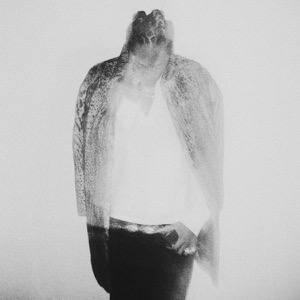
Is that a fair shake for FUTURE? Eh, probably not. While it draws from the same sound as EVOLFUTURE carries itself with a sense of purpose and single-minded intensity, whereas EVOL just sounded out of gas (exceptions aside). It’s an album that goes all-in on drug-dealing, girl-stealing Super Future; opener “Rent Due” leads with a hazy choir cheering Future on while he boasts about how your girl fucks him better when–wait for it–the rent’s due, and the album never veers too far from that mentality. While there are entirely too many mid-tempo, stomping #TrapBangers (of FUTURE‘s 17 tracks, 7 fit this mold, a number you could easily halve), there’s some variety here, too. “I’m So Groovy” and “Outta Time” are lyrically by-numbers, but there’s a rare smoothness in their beats and Future’s delivery on the tracks that comes across as playful, whereas he goes atomic over the chest-thumping beat of “POA,” bobbing and weaving over four thrilling minutes.

Then you’ve got the two most likely keepers: “Mask Off” and “Draco.” “Mask Off”‘s trademark is the pan flute that glides over the track and its hypnotic hook. The combination of flute, a pensive tempo, and Future’s lyrics about his gang days would approach cinematic if it also didn’t sound kind of dejected.  Meanwhile, “Draco” is the most single-able song of the album: it’s a midtempo-plus boilerplate trap song, but with warbling, Starboy synths on top. What puts it over the edge is the repeated hook of “You ain’t never ever get you bitch back” that, like a lot of Future melodies, is made of enough half-steps that it sounds forlorn by default; you can’t tell if he’s talking to you or himself, and the song sticks more because of it.

FUTURE feels like the knowing end of a line. You take in enough of its fairly tired “Fucked your bitch in a trap house” mentality, and it gives off the air of being One Last Ride through this perspective and sound, blasting through its highest highs, and even contemplating a few lows (“When I Was Broke,” “Feds Did a Sweep”). At 17 tracks, it’s at least 5 or 6 longer than it needs to be, and I get the temptation to take your 3 or 4 favorites and drop the rest, like what inevitably happens with Future albums. All the same, FUTURE is worth a listen for having an actual surprise or two on it.

And then comes HNDRXX.

HNDRXX is one of Future’s best records. You’d have people making that claim from the jump because few things engender goodwill like an artist announcing a record as the one they’ve “always wanted to make,” but HNDRXX makes the case all on its own. For one, it’s as close to a beginning-middle-end Album as Future’s ever tried; opener “My Collection” doesn’t jump right in, but gradually unfurls, and closer “Sorry” brings (what’s hopefully) a definitive end to the anti-Ciara bend of his work since their breakup. For another, there’s melodic invention and purpose here that hasn’t been on Future’s albums for a while. He doesn’t spend entire songs going off or riding a beat, instead, takes his time, even on something like the fairly extroverted “Lookin’ Exotic.” These changes look good on an album that lands in more pop or R&B territory than straight up rap.

Honestly, the album HNDRXX reminds me of most is Take Care. Sure, the two share surface details like slow pacing, The Weeknd and Rihanna features, and are both about dudes being moody and vulnerable but also gross (“My Collection” gets kneecapped by “Even if I hit you once, you’re part of my collection”). But, more than that, both albums flip studio-processed hybrid R&B/hip-hop trends inward to reveal artists lonelier than they first appeared. If Future’s albums starting with DS2 were about him pushing everyone and everything away in a blast of codeine, women, and gang violence, HNDRXX is the first time he’s aware of, and using, the resulting empty space. Sounds float instead of beat the listener over the head.

For a project billed ostensibly as more personal, HNDRXX is the most pop radio friendly thing Future’s ever done outside his Drake collaboration What a Time to Be Alive. Any number of tracks, particularly from the fairly robust section between “Incredible” and “New Illuminati,” could conceivably get radio play, and a few outright demand it. “Selfish” with Rihanna is a likely airplay candidate by virtue of two superstars doing a pretty boy-girl duet (that also sounds great), but “Incredible” is the album’s best song. This evolved version of a snaps-snares-synths Mustardwave beat is catchy in like, three different ways and has the perfect amount of sway, while Future sounds as gleeful as he has since “Turn On the Lights” describing his new girl who makes him feel, “In-in-incredible.” It’s a great look on a guy who was described by me about 400 words ago as Mr. “Fucked Your Bitch in a Trap House.” “Incredible” is where HNDRXX‘s sense of melody comes through in a big way, too; it’s Major Key in a major key.

Not everything on the album works: “New Illuminati” seems like a too disposable radio chaser, and you could probably lose “Damage” and “Turn on Me” or “Keep Quiet” without consequence. But what’s good on HNDRXX is real good, and Future lets his guard down fairly often on songs like the Ciara comedown “Solo” and personal favorite “Testify,” a flip of “Incredible” that pleads someone to stay so you can have that feeling. And the album comes with its own “Marvin’s Room” in “Use Me:” a car crash of bruised ego and emotions that’s hard to look away from even as its undercurrent makes you squeamish. Your mileage may vary on how much “Sorry” works as an honest apology to Ciara or as a worthy sequel to “Codiene Crazy,” but it’s a relatively clear-eyed look at the realities of Future’s post-Monster era, and sounds interested in trying to move on from it. If FUTURE was about endings, “Sorry” is about closure.

So, the question is could these albums have been combined? I’ve thought about it, and my answer is not really. Especially for a guy whose records aren’t known for thematic diversity (FUTURE and HNDRXX included), putting “Mask Off” and “Testify” near each other is just going to induce whiplash. It’s possible that a Speakerboxxx/The Love Below deal could work if you pared back each side–FUTURE, more so–to 12-14 tracks, but even then, I feel like they lose their identities. FUTURE is the big, loud, banger whose snarling means more knowing that something is about to change. And HNDRXX sounds deeper with its companion to provide the flash and attitude. They’re best taken as two separate units; that’s the rock star move. That’s the experience.

Posted in Album Reviews | Tagged , , , , , , | Leave a comment

Radio Rant: Lorde – “Green Light”

Hello, and welcome to Radio Rants. Time to go today.

Let’s just say it upfront: “Green Light” is about as perfect a welcome back as possible.

To appreciate how well “Green Light” hits its target, you have to look at where Lorde’s been, compared to where she is; you’ve got to return to “Royals” (“royyyyallss”) for a second. Lorde’s goal was always the mainstream (she signed with a major label when she was 12), but she and “Royals” were an alternative radio hit for months before crossing over. And I feel like Lorde didn’t land on Alternative Radio because she made for great programming next to like, Phantogram, but because she made pop music that wouldn’t fit the narrow definition of pop in 2013. She didn’t conform to the styles of Alt. as much as she just didn’t sound mainstream, both on “Royals” and the rest of debut Pure Heroine. This means that even once she started notching hit songs and going to award shows with Taylor Swift, Lorde still had a core fanbase of art kids, and a critical reputation as a highly respected genuine weirdo. If that was all, then “Green Light” could just be whatever, but Lorde’s also an artist with multiple top ten hits and a double platinum (with no features) debut coming back after a three-year absence, so she has to hit a broad appeal out of the gate while still coming at the mainstream from an alternative bend.

And “Green Light” does that. It’s different enough from Pure Heroine that it reflects artistic development (and, if you feel like being cynical, she can market it as “Like nothing I’ve done before,” which–while true–definitely feels like an oversell) while still sounding like Lorde, and it’ll play on pop radio without being mistaken for a Daya track. As a song, it’s designed to fit in on your local alternative station, the SNL stage, Billboard’s Hot 100, and sometime between 9:50 and 10:15 in Indio/New Orleans/Randall’s Island/Manchester without ever sounding too in or out of place.

The song will fit different formats because 1. Lorde’s always lived between genres, and 2. it jumps moods a few times. “Green Light” opens with just Lorde’s vocals and single “smash the keys” piano chords before slowly introducing production flourishes and some Pure Heroine-style vocal layering on a line about teeth (and people try to call this song a sell out move). Just as that verse sounds like it’s about to crescendo, a dance beat kicks in with faster disco piano chords and a hint of strings for a prechorus where Lorde sings “But I hear sounds in my mind/Brand new sounds in my mind” over music that honest to God sounds exciting. It’s easily the best part of the song.

But then comes a chorus that, for as otherwise canny and good as “Green Light” is, fumbles. A few dramatic drum hits announce “I’M WAITING FOR IT, THAT GREEN LIGHT, I WANT IT” and it sounds like the song’s going to leap…but doesn’t. Instead, it pulls back, burying the piano from earlier in a pedestrian beat punctuated with handclaps and a repeated crowd chorus while Lorde gets a little drowned out herself. It just doesn’t work. There’s nothing especially dance-able, nor does it sound as cathartic as the build-up implies, and there’s no rush. It sounds like an unhappy marriage between “I Love It” and “Pompeii” that contests Coachella profits in the divorce. It just sounds sort of by-numbers, which is weird for Lorde. So, why the change?

We need to talk about Jack Antonoff.

Antonoff first came to the masses as a multi-instrumentalist and songwriter/producer in the Grammy winning, semi-insufferable indie pop band fun., and also releases material solo under the moniker Bleachers. He’s an habitual co-writer/producer for pop artists, most prominently for two songs for Taylor Swift’s 1989: “I Wish You Would” (a song I adore), and “Out of the Woods” (a song I always think I like more than I do). Between collaborating with T.Swift again and Zayn on “I Don’t Wanna Live Forever” and working with Lorde as a co-producer on Melodrama as a whole, it’s entirely possible trying to position himself as Brian Eno or Danger Mouse-style figure: a hireable auteur producer who brings their own touch and sensibilities to big-ticket projects along with the air of artistic legitimacy.

Only, Antonoff isn’t good enough to merit the status. I like some stuff he’s done, but his work is hit and miss overall; his default style is to overload a track with the plasticky 80s synths and textures that now signify festival pop, keep the rhythms flatfooted, and completely disregard the low end. When he succeeds on “I Wanna Get Better” or “I Wish You Would,” it’s because the songs brute force their way through choruses that blow up the knots the verses twist themselves into. As a producer, he lacks the fine motor skill needed to reconcile “Green Light”‘s frantically rhythmic prechorus and the chorus’s big delivery. It’s the drums that really turn me off the hook here: the live drumming stops too early, and the drumpads are too soft. I’ve heard “Green Light” compared to Grimes a couple of times, but it doesn’t mesh. Listen to “Flesh without Blood.” Do you hear how it sounds like Grimes sampled meteor impacts for the drums? You don’t get that with “Green Light.”

Maybe I’m being nitpicky, though. The verses are solid, and that prechorus is to die for; when everything but the piano loop drops out about here, I get hyped every time. I like “Green Light,” at the outset here, it’s a better comeback single than “Perfect Illusion” and certainly “Shape of You,” and I’d even put it above “Hello” in terms of getting me excited to hear the album, albeit with reservations. The production’s sort of a letdown, but the songwriting isn’t; get ready to sink your teeth into Melodrama, and for the glory (and gore) of the Lorde.

Posted in Radio Rants | Tagged , , , , , , , | Leave a comment